
Some of the most important holes in industry are the ones nobody ever sees. They carry oil to a bearing, coolant through a mould, hydraulic fluid along a cylinder or fuel into an engine. When these long, narrow holes run straight and clean, equipment works smoothly for years. When they wander, the whole component can be lost.
That quiet value is what deep hole drilling delivers. This guide explains what it is, how the process works, which methods are used and where the results end up. It will also help if you are comparing suppliers for deep hole drilling projects in Dubai and want to know which questions to ask.
Quick Answer: Deep hole drilling is a specialised machining method that produces long, straight holes, usually where the depth is many times the diameter. CNC deep hole drilling combines purpose-built tools, high-pressure coolant and computer control to flush chips out and keep the hole accurate. It is widely used in oil and gas, aerospace, automotive, heavy engineering and energy.
What Is Deep Hole Drilling?
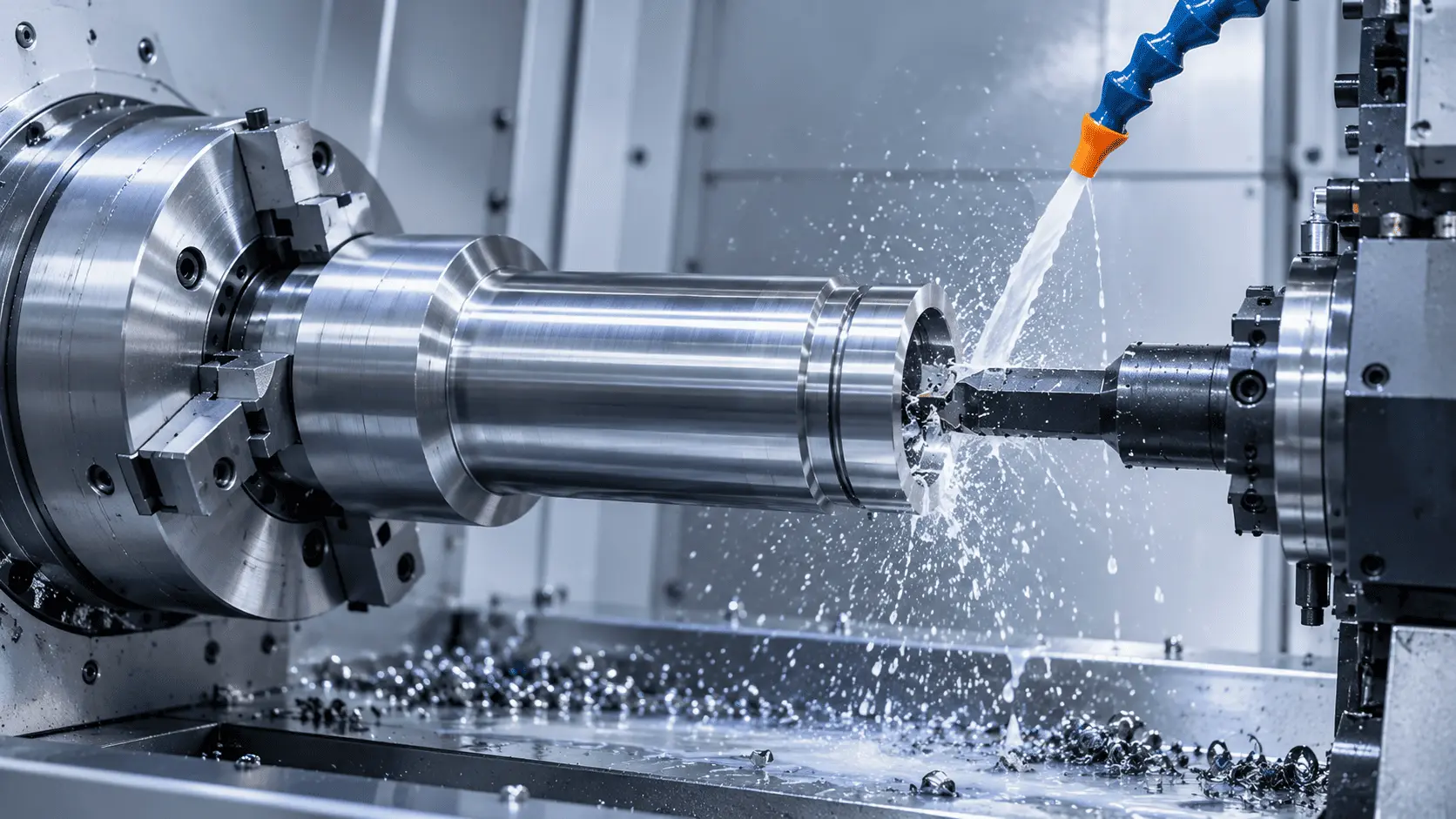
Deep hole drilling is a machining process that creates holes with a very large depth compared with their diameter, while keeping them straight, round and smooth. A standard twist drill struggles at these depths because chips jam, heat builds up and the tool drifts off line. Purpose-built tools, pressurised coolant and firm guidance solve those problems.
It is not simply drilling for longer. The process is engineered around chip control and tool support, which is why it uses different drills, machines and set-ups from everyday drilling.
Understanding the Depth-to-Diameter (L/D) Ratio
The L/D ratio is the hole depth divided by the hole diameter, and it is the standard way to describe how deep a hole really is. As an illustrative example, a 20 mm hole drilled 300 mm deep has an L/D ratio of 15, while a 50 mm hole drilled 1,000 mm deep has a ratio of 20.
The higher the ratio, the harder it becomes to clear chips, cool the cutting edge and keep the tool on its axis. Specialised methods exist to manage exactly these pressures.
When Is a Hole Considered a Deep Hole?
A common rule of thumb treats a hole as deep once its depth passes about ten times its diameter. Some workshops and standards draw the line elsewhere, so treat this as a guide rather than a fixed rule.
Practical signs that you need a specialist method include repeated pecking cycles, poor straightness with a twist drill, chips that clog the flutes or a bore that finishes off centre. If the drawing demands tight straightness over a long length, a specialist route is usually the safer choice.
Types of Deep Hole Drilling Methods
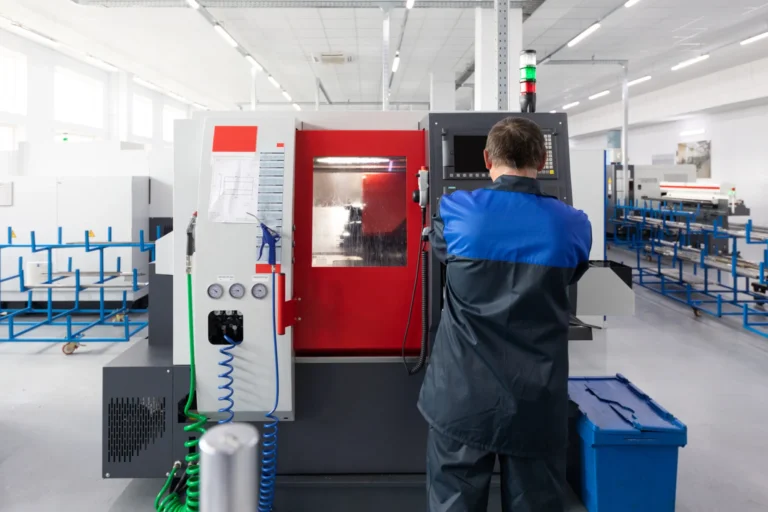
The main methods are gun drilling, BTA drilling, ejector drilling and trepanning, and the right choice depends mostly on hole diameter, depth and material. Several types of deep hole drilling machine support them, from dedicated horizontal machines to CNC lathes and machining centres fitted for deep drilling. Horizontal machines are widely used for long workpieces because they support the part along its length. Some machines rotate the workpiece, some rotate the tool and some counter-rotate both to improve straightness.
| Method | Typical hole size | Coolant and chip route | Best suited to |
| Gun drilling | Smaller diameters | Coolant through the tool, chips leave along an outside groove | Long, straight, small holes with a good finish |
| BTA drilling | Medium to large diameters | Coolant outside the tube, chips leave through the tube | Larger holes at higher removal rates |
| Ejector drilling | Medium diameters | Double tube, vacuum effect draws chips back | Machines not purpose-built for deep drilling |
| Trepanning | Large diameters | Cuts a ring and leaves a solid core | Large holes where saving material and power matters |
Exact diameter and depth ranges depend on the tooling and machine, so confirm them with the workshop.
Gun Drilling
Gun drilling is the classic method for long, small-diameter holes. The gun drill is a single-flute tool with a V-shaped groove along its length and a hollow shank. Coolant is pumped at high pressure through the shank to the tip, and chips are washed back out along the groove. Carbide heads with built-in guide pads support the tool in the hole, which is why this method is valued for accuracy and finish.
BTA Drilling
BTA drilling, named after the Boring and Trepanning Association, suits larger diameters and higher removal rates. Coolant is pumped between the drill tube and the hole wall to the cutting head, and chips return through the inside of the tube. A pressure head seals the workpiece to hold the coolant. The same tube system is also used for deep hole boring, which enlarges or finishes an existing hole to improve its size, straightness and surface.
Ejector Drilling
Ejector drilling uses a double tube system. Coolant flows between the inner and outer tubes, and part of it creates a vacuum effect that draws chips back through the inner tube. The method can run on lathes and machining centres with less specialised equipment than BTA, although it still needs dedicated tooling and a strong coolant supply.
Trepanning
Trepanning cuts only a ring around a central core rather than turning the whole hole into chips. Less material is removed, so less power is needed, and the solid core can often be kept for reuse or testing. It is typically chosen for large-diameter holes in forgings and heavy components.
Key Benefits of CNC Deep Hole Drilling
The main benefit is accuracy: long holes that stay straight, round and smooth. Other advantages follow from that.
- Straightness and concentricity that standard drilling struggles to match at depth
- Good surface finish, which can reduce or remove later finishing
- Continuous cutting without repeated pecking, which saves time
- Repeatable results from batch to batch under CNC control
- Fewer secondary operations, because holes can often be finished in one set-up
- Suitability for many materials when the right carbide grade and tool design are used
There is also a cost benefit that is easy to overlook. A failed hole in a costly forging can mean losing the whole part. A controlled, specialist process lowers that risk.
Industrial Applications of Deep Hole Drilling
Deep hole drilling appears wherever fluid, oil, coolant or fuel has to travel through a solid component, or where a long hollow section reduces weight without losing strength.
Oil and Gas Industry
Drill collars, drill pipe components, valve bodies, wellhead parts, pump shafts and hydraulic cylinders all depend on long, accurate bores. In the Gulf, the oil and gas sector also pushes for corrosion-resistant grades and strong material traceability.
Safety reminder: pressure-containing components must be made to the applicable code and approved by a qualified engineer. Drilling accuracy alone does not make a part fit for service.
Aerospace Industry
Landing gear parts, engine shafts and structural components often need deep, precise holes in high-strength steels and titanium. These jobs usually come with tight inspection and documentation requirements, so confirm what quality standards your project needs.
Automotive Industry
Crankshaft oil passages, camshafts, fuel rails, injector bodies and steering or transmission shafts rely on deep holes for lubrication and fluid flow. High volumes make repeatability especially important.
Heavy Engineering
Hydraulic cylinders, press and forging rams, mining and construction equipment, marine shafts and large tooling all use deep drilling. Moulds and dies also need long cooling channels to control temperature during production.
Energy Industry
Turbine and generator shafts, rotor bores, heat exchanger tube sheets and wind turbine shafts all require deep holes. Power and water utilities across the region rely on this kind of component for continuous duty.
Frequently Asked Questions About Deep Hole Drilling
What is deep hole drilling used for?
It is used to make long, straight holes for oil passages, coolant channels, hydraulic bores and hollow shafts. It is common in oil and gas, aerospace, automotive, heavy engineering and energy.
How does the deep hole drilling process work?
A special drill is fed into the workpiece while high-pressure coolant cools the cutting edge and flushes the chips out. The tool is guided along its length so the hole stays straight. CNC control keeps the settings consistent.
What are the main types of deep hole drilling machine?
The main types include horizontal and vertical machines, plus CNC lathes and machining centres fitted for deep drilling. They support methods such as gun drilling, BTA drilling, ejector drilling and trepanning. The best choice depends on the part and the hole.
What is the difference between deep hole drilling and deep hole boring?
Drilling creates the hole from solid material. Deep hole boring enlarges or finishes an existing hole to improve its size, straightness and surface quality. Many jobs use both in sequence.
How deep can CNC deep hole drilling go?
Depth depends on the method, hole diameter, machine and material. Gun drilling is generally used for very high depth-to-diameter ratios in small holes. Always confirm the exact limits with the workshop.
Which industries use deep hole drilling services?
Oil and gas, aerospace, automotive, heavy engineering and energy are the main users. Moulds, dies and hydraulic equipment makers also rely on them.
How do I choose a provider for deep hole drilling Dubai projects?
Check the range of methods, the diameter and depth capability, the inspection equipment and the experience with your material. Send a real drawing and see how clearly the workshop explains its approach.
Conclusion
Deep, accurate holes are rarely noticed, yet they decide whether critical equipment performs. Deep hole drilling achieves this through the right method, firm tool guidance, high-pressure coolant and careful inspection, and CNC deep hole drilling adds the consistency that batch work demands.
Match the method to the diameter, depth and material, specify only the accuracy you need and choose a workshop that can prove its results. For any pressure-containing or safety-related component, involve a qualified engineer and follow the applicable code.
Ready to talk through your drawing? Speak with the Accurate Edge team.