
Honing is a precision machining process that finishes the inside of a cylindrical bore to an exact diameter, leaving behind a fine crisscross surface pattern. That pattern isn’t cosmetic. It holds a thin film of oil, keeps moving parts lubricated, and gives seals something consistent to grip under pressure. Put simply: honing is the step that turns a machined part into a part that performs reliably for years.
If you’re sourcing parts, running a plant, or trying to work out why one supplier’s components consistently outlast another’s, honing is usually part of the answer. This guide covers what honing does, how vertical and horizontal setups differ, how honing vs grinding compares, and why it matters so much in oil and gas, plus what to check when choosing a honing machining shop Dubai teams can confidently rely on.
Why High-Stakes Manufacturing Relies on Honing
An engine cylinder. A hydraulic ram. A valve body that has to hold pressure reliably for years. These components work hard, continuously, and a properly finished internal surface is what keeps them performing at their best for the long haul.
Here’s the interesting part about a bore’s finish: nobody ever sees it once the equipment is assembled. It’s sealed away the moment the part goes together. And yet it’s doing more work than almost anything else in that system. Honing is precisely what ensures that hidden surface performs as well as it looks.
Three things matter most here:
- Friction: A honed surface lets components slide against each other with far less resistance than a rougher finish allows. Less friction means less heat and a longer working life.
- Seals: Seals need something consistent to grip. That crisscross finish gives them exactly that, supporting a tight, dependable seal over time.
- Cost efficiency: A properly honed bore helps a part reach its full expected lifespan, protecting the investment already made in the component and the equipment around it.
In oil and gas, aerospace, and heavy equipment, where reliability is everything, a precision-honed finish is what gives operators the confidence their equipment will keep performing under real-world conditions.
How the Honing Process Actually Works
A honing tool carries abrasive stones mounted around a rotating head. That head enters the bore and does two things at once, spins, and strokes back and forth along the length of the part. That combined motion is what creates the crisscross pattern. Because the tool “floats” inside the hole rather than being rigidly guided, it follows the existing centerline of the bore while smoothing out high spots, correcting geometry like taper, ovality, and barrel-shape left behind by earlier boring or drilling steps.
Speed and pressure are both carefully controlled throughout. An experienced operator fine-tunes both settings depending on the material being honed, ordinary carbon steel or a more delicate alloy, so the result stays clean and consistent.
That’s the core of cylinder bore honing: controlled, deliberate material removal, resulting in a bore that’s smooth to the touch and accurate end to end. It takes more time than many other machining methods. That patience is exactly what makes it so effective once the part is out doing real work.
Vertical vs Horizontal Honing: Which Setup Do You Need?
Not every part gets honed the same way. The right choice comes down to size, shape, and weight. There are two main approaches, and while they’re aiming for the same outcome, each is well suited to a different kind of component.
| Specification | Vertical Honing | Horizontal Honing |
| Best Suited For | Shorter, heavier components | Very long parts, such as tubes or pipes |
| Component Examples | Engine cylinder liners, large valves, compressor cylinders | Deep bore tubes, long hydraulic cylinders, oilfield stabilizers |
| Key Advantage | Gravity naturally keeps the tool centered on heavy parts | Handles lengths impractical to stand upright |
Vertical honing stands the part upright. A great fit for anything heavy but not particularly long, gravity naturally helps keep the tool centered as it moves through the bore. Engine cylinder liners and large valve bodies are typical candidates.
Horizontal honing supports the part along its whole length. This is the method of choice for anything long and narrow, deep bore tubes, oilfield stabilizers, common in oil and gas work, giving even the longest components full, even support from one end to the other.
A shop worth choosing evaluates each job individually. They’ll consider your part’s size, weight, and material, and select whichever setup delivers the most accurate result.
Honing vs Grinding: Making the Right Machining Choice
“Honing” and “grinding” are sometimes used interchangeably, but understanding the difference helps buyers make a more informed choice.
Surface finish is one place they differ. Grinding leaves a smooth, single-direction pattern. Honing leaves a crisscross pattern of microscopic peaks and valleys that acts as a reservoir for oil, keeping surfaces well lubricated even under repeated high-pressure strokes.
Heat is another consideration. Grinding can generate significant heat, which calls for extra care with certain specialty alloys. Honing runs cooler, helping preserve the material’s structural integrity.
Then there’s accuracy. Honing follows the shape of the bore that’s already there instead of cutting a new path, so it’s especially effective at refining small imperfections, like taper or slight unevenness, while keeping the part’s centerline true.
When oil retention, precise alignment, and material integrity all matter for a component, honing is often the preferred choice. It’s worth asking your machining partner which process they recommend and why, the ideal approach usually depends on the material and how the part will be used in the field.
Specialized Deep Bore Honing for Oil and Gas Components
Oil and gas equipment operates in some of the most demanding conditions in industry, running under extreme pressure, often in remote or subsea environments where consistent performance really counts.
Deep bore honing plays a central role in keeping this equipment reliable. Downhole tools, mud motors, Blowout Preventers, whipstocks, and oilfield stabilizers all rely on it to meet strict API standards for straightness, finish, and dimensional accuracy. Many of these bores run several meters long, calling for exceptional precision. Well-executed honing can hold roundness and straightness tolerances within 0.001mm, a level of accuracy that boring or drilling alone can’t reach.
For the companies running this equipment, the priority is straightforward: maximize uptime and keep operations running safely. Honing for oil and gas components supports both, ensuring these long, demanding parts are built to the exact standard the job requires.
What makes deep bore work so impressive is the length itself. Holding a tight tolerance across a few centimeters is one thing. Holding that same accuracy consistently across several meters takes specialized horizontal equipment, a steady hand, and disciplined process control from the first pass to the last.
Our Honing Service
Here’s what to expect when you send us a drawing:
- Honing capacity: diameters up to 500mm (20″), lengths up to 10 meters (394″) in a single pass
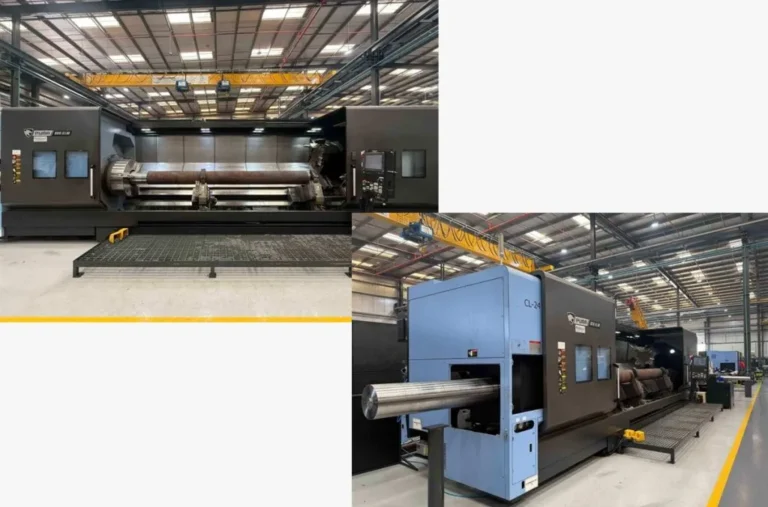
- Equipment: 2 vertical and 2 horizontal honing machines
- Achievable tolerance: roundness and straightness within 0.001mm
- Surface finish: cross-hatch angle and Ra surface roughness controlled to OEM specification
- Materials handled: alloy steels, stainless steel (304, 316), duplex and super duplex, Inconel (625, 925, 718), chrome grades (3, 9, 23), and other exotic alloys
- Industries served: Oil & Gas, Petrochemical, Aerospace, Marine, Automotive, and general Precision Engineering
- Inspection: 100% component inspection, CMM-verified, using calibrated and traceable gauges
- Certifications: API Q1 (9th Edition), API Monogram (5B, 6A, 7-1, 7-2), ISO 9001:2015, ISO 14001:2015, ISO 45001:2018
Choosing the Right Honing Machining Partner in Dubai
Choosing a honing services Dubai partner is an important decision, one that shapes how long your components last, how smoothly your project runs, and how confidently you meet industry standards. Here’s what’s genuinely worth checking:
- API Q1 and API Monogram certification: Confirms a quality management system built specifically for oil and gas work, with full documentation and traceability at every stage.
- ISO certification: ISO 9001:2015, alongside ISO 14001:2015 and ISO 45001:2018, reflects consistent process control and strong safety management.
- Experience with specialty metals: High-nickel alloys, Inconel, and duplex stainless steel each call for specific equipment and expertise, honing them well is a genuine specialty.
- In-house quality control: On-site CMM inspection with 100% component checks means faster turnaround and greater confidence in every part delivered.
- Track record: Since 2007, Accurate Edge has grown from a single facility with 3 machines to 4 facilities running 140+ machines, building long-term partnerships with clients across the region.
Accurate Edge is a UAE-based precision machining facility built around these standards, handling both vertical and horizontal honing in Dubai, from smaller valve bodies to long deep bore honing services for the oil and gas sector. Our honing work sits alongside our broader CNC machining, deep hole drilling and boring, and grinding services, so components that need more than one process stay under one roof.
Need a honing solution for hydraulic cylinders, valve bodies, or deep-bore oil & gas components?
Send us your drawings and our engineers will recommend the right honing process, estimate achievable tolerances, and provide a quotation.
FAQ
What is the main difference between vertical and horizontal honing?
Vertical honing suits heavier, shorter parts because gravity helps keep everything centered. Horizontal honing works best for very long components, like deep bore pipes, that need full-length support. Accurate Edge runs 2 vertical and 2 horizontal honing machines to cover both.
Why is honing better than grinding for internal cylinders?
Honing generates very little heat, helping protect the metal’s structure, and it leaves a crisscross pattern that holds oil well and supports long-lasting seal performance.
What components use deep bore honing in the Oil & Gas industry?
Downhole drilling tools, hydraulic cylinders, whipstocks, and oilfield stabilizers, typically. All of them need to stay perfectly straight over several meters to perform reliably under extreme pressure.
What tolerance can honing achieve?
Achievable tolerance depends on bore length, material, and diameter. With proper process control, roundness and straightness can be held within 0.001mm, a level of precision well beyond what boring or drilling alone can achieve.