
The Problem Every Oil & Gas Engineer in the UAE Knows
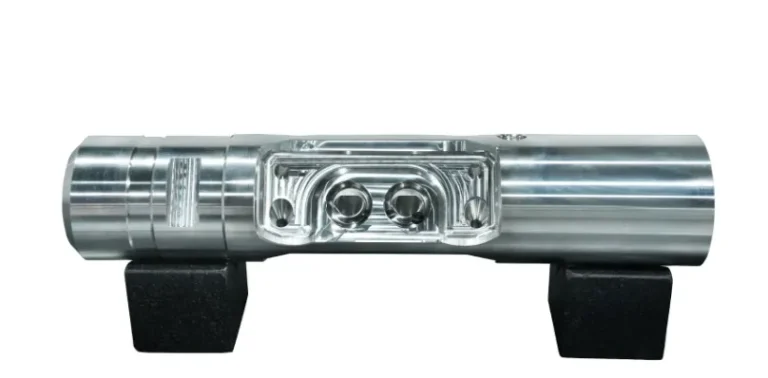
You have a drawing on your desk. Inconel 718 downhole mandrel. Central bore: 28mm diameter, 420mm deep. Depth-to-diameter ratio: 15:1.
You send it to a standard CNC machining company in Dubai. They quote it. They attempt it at a conventional machining centre. The bore comes back with 0.4mm deviation at 400mm depth. The component is scrapped. Three weeks lost.
This is not an edge case. It happens regularly in UAE oil and gas component manufacturing because the boundary between what conventional drilling can and cannot achieve is not well understood at the procurement stage , and by the time it becomes clear, the material cost and schedule damage are already done.
Gun drilling exists to solve exactly this problem. It is the process the oil and gas industry developed for bores that conventional drilling cannot produce , and it has been the standard for downhole component manufacturing for decades. According to the SME Manufacturing Engineering technical reference on deep hole drilling, depth-to-diameter ratios above 10:1 consistently require dedicated deep hole processes to achieve acceptable straightness and surface finish in production.
This guide covers everything: how gun drilling works, what tolerances it achieves, when it is the right choice over BTA drilling, which UAE oil and gas components require it, and what the complete deep bore workflow looks like from raw material to final inspection. If you have a component with a bore deeper than 10× its diameter, this guide is for you.
What Is Gun Drilling? Complete Definition
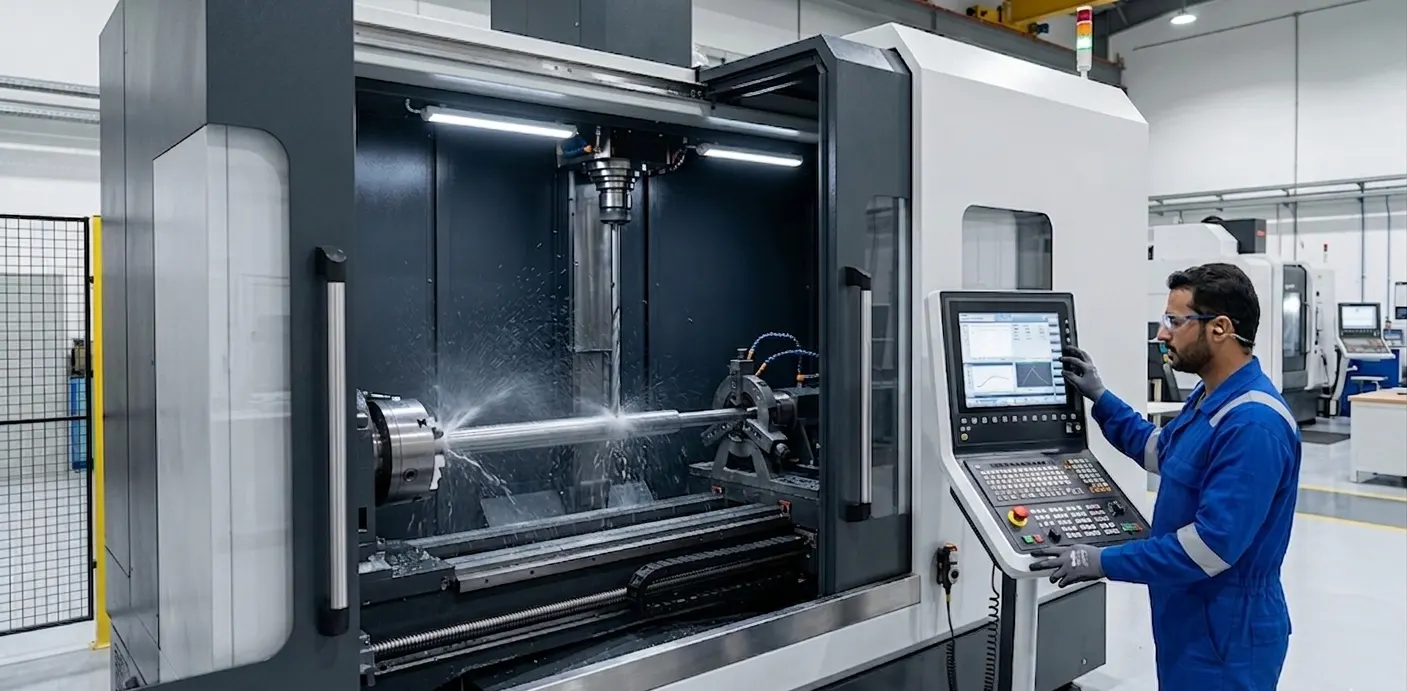
Gun drilling is a deep hole drilling process that uses a single-flute carbide tool with an internal coolant channel to produce long, straight, accurate bores , typically with depth-to-diameter ratios of 20:1 to 100:1 or greater.
High-pressure coolant (40–100 bar) is pumped through a channel running the full length of the drill directly to the cutting tip. It lubricates the cutting edge and flushes chips back continuously through a V-shaped external flute on the drill body. Guide pads on the drill head bear against the freshly cut bore wall, stabilising the tool and preventing deflection regardless of how deep the cut goes.
The process name comes from its origin: gun drilling was developed to produce straight bores in rifle and artillery barrels. A bore deviating by fractions of a millimetre across its length has direct, measurable consequences at range. The same physical principle applies to a downhole mandrel , bore deviation affects seal integrity, pressure performance, and component function in exactly the same way.
For UAE manufacturers supplying components to API Q1-certified oil and gas operators across the GCC, the traceability and process documentation that gun drilling generates is as important as the dimensional result itself.
How Does Gun Drilling Work? Step-by-Step
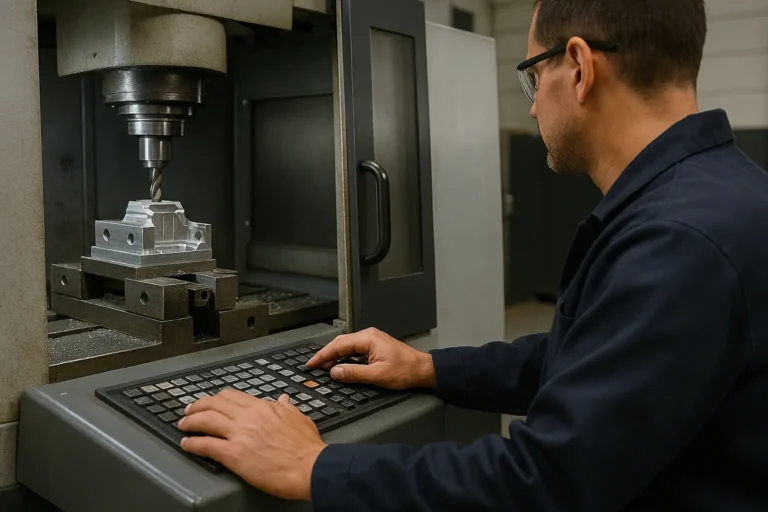
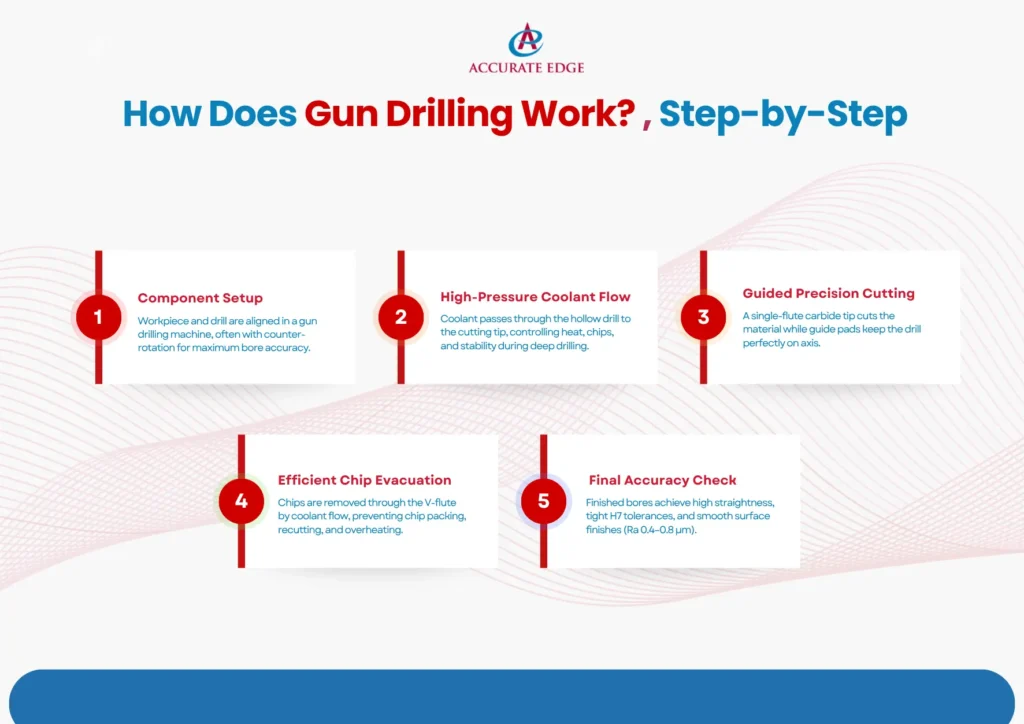
Step 1 , Component setup. The workpiece is set up in a gun drilling machine or a CNC machining centre with deep hole drilling capability. Often both workpiece and drill rotate in opposite directions , counter-rotation stabilises the cut and further reduces bore deviation at extreme depths.
Step 2 , High-pressure coolant delivery. Coolant is delivered through the hollow drill shank to the cutting tip. For difficult materials, Inconel 718, super duplex 2507, titanium , higher pressures and tightly controlled feed rates are required compared to standard alloy steel. The Machinery’s Handbook documents the relationship between coolant pressure, chip formation, and bore quality in difficult-to-machine alloys.
Step 3 , Guided cutting. The single-flute carbide tip removes material while guide pads immediately behind the cutting tip bear against the bore wall , continuously steering the drill on axis throughout the entire cut depth.
Step 4 , Chip evacuation. Chips exit through the external V-flute carried by coolant flow. No chip packing. No recutting. No heat accumulation at depth. This is the fundamental difference between gun drilling and conventional deep drilling on a standard CNC machining centre.
Step 5 , Dimensional verification. On completion, the bore is measured for straightness, diameter, and surface finish. Straightness deviation below 0.05mm per 300mm depth is standard. Bore diameter tolerance H7 or tighter. Surface finish Ra 0.4 — 0.8μm direct from drilling in most materials , finer than what conventional drilling achieves even in shallow bores.
Gun Drilling Tolerances and Capabilities , What to Expect
| Parameter | Standard Gun Drilling Capability |
| Hole diameter range | 2mm to 50mm |
| Maximum depth | 2,000mm+ (diameter-dependent) |
| Depth-to-diameter ratio | Up to 100:1 in favourable materials |
| Straightness deviation | Less than 0.05mm per 300mm depth |
| Diameter tolerance | H7 or tighter in most materials |
| Surface finish direct from drilling | Ra 0.4–0.8μm |
| Post-drilling honing achievable | Ra 0.1–0.2μm |
| Materials | Alloy steel, stainless, duplex, super duplex 2507, Inconel 625/718, titanium |
For UAE oil and gas component bores in the 10–40mm diameter range at 300–800mm depths , the most common profile in downhole tool manufacturing for the GCC market , these results are routine, not exceptional. They require correct tooling, correct coolant parameters, and an operator experienced in difficult materials.
These are the same capability standards referenced by API Spec 7-1 for rotary drill stem element manufacturing tolerances, which governs many of the downhole component bore specifications of Accurate Edge machines to.
Why Conventional Drilling Fails Beyond 5:1 Depth-to-Diameter Ratio
This is the most important concept for engineers and procurement teams to understand before specifying deep bore work.
Conventional twist drills deliver coolant externally , flood cooling from outside the tool. As depth increases, coolant cannot reliably reach the cutting zone through the chip-filled flute. Chips accumulate. Recutting begins. Heat builds at the tip. The drill deflects.
For a 20mm diameter hole in alloy steel:
- At 80mm depth (4:1 ratio): conventional drilling is reliable
- At 120mm depth (6:1 ratio): surface finish and straightness begin degrading
- At 200mm depth (10:1 ratio): hole deviation may reach 0.5mm or more from the intended axis , unacceptable for any precision oil and gas component
The American Society of Mechanical Engineers (ASME) identifies this 5:1 threshold as the practical upper limit for conventional drilling in production environments. Beyond it, the process becomes unreliable regardless of machine rigidity or fixturing quality.
Gun drilling solves this systematically:
- Internal coolant clears chips at every depth, continuously
- Guide pads prevent tool deflection regardless of bore depth
- Single-flute geometry reduces cutting forces versus multi-flute tools
- Counter-rotation further stabilises the cut at extreme depths
Result: holes to 1,000mm or more with straightness deviation under 0.1mm total , consistently, across a production batch, in materials that conventional drilling cannot manage even at half the depth.
At Accurate Edge, our deep hole drilling and boring capability covers the full range of diameters and depths required by UAE oil and gas component drawings, with in-process measurement at depth to verify straightness before the workpiece leaves the machine.
Gun Drilling vs BTA Drilling vs Conventional Drilling , Full Comparison
Engineers sourcing deep hole drilling in the UAE frequently encounter both gun drilling and BTA drilling as options. They are not interchangeable , each has a specific application domain.
| Feature | Gun Drilling | BTA Drilling | Conventional Drilling |
| Typical diameter range | 2–50mm | 20–200mm+ | 1–50mm |
| Max depth-to-diameter ratio | 100:1 | 200:1 | 5:1 reliable |
| Straightness tolerance | Excellent (0.05mm/300mm) | Good | Poor beyond 5:1 |
| Surface finish direct | Ra 0.4–0.8μm | Ra 0.8–1.6μm | Ra 1.6–3.2μm typical |
| Chip evacuation method | External flute, internal coolant | Internal evacuation through tool | External flood only |
| Performance in Inconel/super duplex | Excellent , controlled cutting | Suitable for larger diameters | Not recommended at depth |
| Production volume | Low to medium | Medium to high | High |
| Post-process honing required | Sometimes | Often | Usually |
| Best application | Safety-critical precision bores, oil & gas downhole, aerospace | Large diameter, high volume | Standard through-holes, shallow depths |
The rule for UAE oil and gas component manufacturing is straightforward: if the bore is 2–40mm in diameter, in a difficult material like Inconel or super duplex, at low-to-medium production volume, with safety documentation required , that is a gun drilling application. BTA drilling serves a different part of the market.
For a deeper technical comparison of BTA versus gun drilling process mechanics, the Sandvik Coromant deep hole drilling guide provides detailed tooling and parameter guidance across both processes.
Oil and Gas Applications That Require Gun Drilling in the UAE
Downhole Tool Mandrels and Collars
Long central bores for fluid passageways, wireline access, pressure balancing, and hydraulic actuation channels. Materials including Inconel 718, L80, P110, super duplex 2507, and 4140 alloy steel. The bore must be straight, the surface clean, and the result repeatable across a production batch.
This is the core application for precision machining for oil and gas in UAE contract manufacturing, and it drives the majority of gun drilling demand in Sharjah and Dubai industrial zones. When mandrel bores wander off-axis, they affect not just the machined component but every downstream assembly that depends on its geometry , packers, seals, flow control elements.
Valve Bodies and Seat Bores
Long pilot bores in gate valve, ball valve, and check valve bodies for high-pressure service. The gun-drilled bore is often followed by precision honing to achieve the final surface finish and diameter tolerance required for metal-to-metal sealing. A wandering bore affects seal geometry, pressure rating, and valve function in ways that cannot be corrected downstream.
For valve bodies destined for sour service applications , where hydrogen sulphide is present , the bore surface must also accept electroless nickel plating to protect against corrosion. The combination of gun drilling, honing, and ENP coating is the standard workflow for high-pressure, corrosive-service valve bodies in the GCC.
Wellhead and Christmas Tree Components
Connector bores, seal housings, hydraulic actuation passages, and pressure balance ports in components where multiple bores must intersect accurately. Super duplex 2507 and 6Mo stainless are common materials for Gulf-facing wellhead equipment , both are gun-drillable with correct parameters but require more careful process management than standard stainless grades.
The API 6A standard for wellhead and Christmas tree equipment specifies bore tolerances and surface finish requirements that conventional drilling cannot reliably achieve in these materials at the depths involved.
Hydraulic Manifolds and Control System Bodies
Multiple intersecting bores at controlled depths and angles. Gun drilling each bore independently , before intersecting passages are opened , ensures geometric accuracy that cannot be achieved if bores wander during drilling. This approach is standard for subsea control manifold bodies and surface hydraulic power unit components used across GCC installations.
Pump Shafts and Rotating Components
Through-bores and lateral passages for lubrication, pressure balance, and fluid communication in centrifugal and reciprocating pump assemblies. Bore straightness directly affects dynamic balance at operating speed; in high-speed rotating components, a bore deviation that appears small on a CMM report translates to measurable vibration and accelerated bearing wear in service.
Aerospace Components, UAE and GCC Supply Chain
Cooling channels in turbine blades, precision bores in hydraulic actuators, and structural bores in aerospace assemblies. The UAE’s growing aerospace manufacturing base , concentrated around Al Maktoum International and the Tawazun and EDGE industrial groups , demands the same gun drilling capability as oil and gas. Deep hole drilling for aerospace is a growing segment of Accurate Edge’s work, driven by the same material and tolerance requirements as downhole tooling.
The Complete Deep Bore Workflow: Gun Drilling + Honing + ENP + NDT
For safety-critical components, gun drilling is rarely the only special process. The complete workflow typically runs:
Stage 1 , CNC Machining Component turned and milled to near-final dimensions on our CNC machining centres in Sharjah. For complex downhole tools, this means multi-axis turning and live-tool milling to produce all external features before the bore is gun drilled , locking in the reference geometry before the most demanding operation.
Stage 2 , Gun Drilling Bore produced to diameter and straightness specification. For Inconel 718 at 400mm depth in a 25mm bore, this means controlled feed rates, elevated coolant pressure, and fresh tooling for each component in a critical batch. Straightness measured in-process. No surprises at final inspection.
Stage 3 , Honing Where the final bore specification requires surface finish tighter than Ra 0.8μm or diameter tolerance tighter than H7, honing follows gun drilling. The honing process refines the bore wall to Ra 0.1–0.2μm and corrects minor diameter variation while preserving the straightness that gun drilling established. For bores mating with pistons, seals, or precision valve elements, honing is not optional , it is the process that makes the sealing interface function.
Stage 4 , Electroless Nickel Plating (ENP) For components in corrosive service , sour gas, produced water, offshore environments , electroless nickel plating is applied uniformly inside the bore and across all external surfaces. Unlike electrolytic plating, ENP deposits at equal thickness regardless of geometry: a uniform 25–75μm deposit inside a 400mm deep bore and on the external threads of the same component. Post-plate hardness to 70 HRC after heat treatment. This is what makes ENP the coating of choice for downhole components across the GCC , not just corrosion resistance but dimensional predictability.
The ASTM B733 standard governs electroless nickel plating for engineering applications. Accurate Edge applies ENP to API specification with full thickness verification and adhesion testing on every batch.
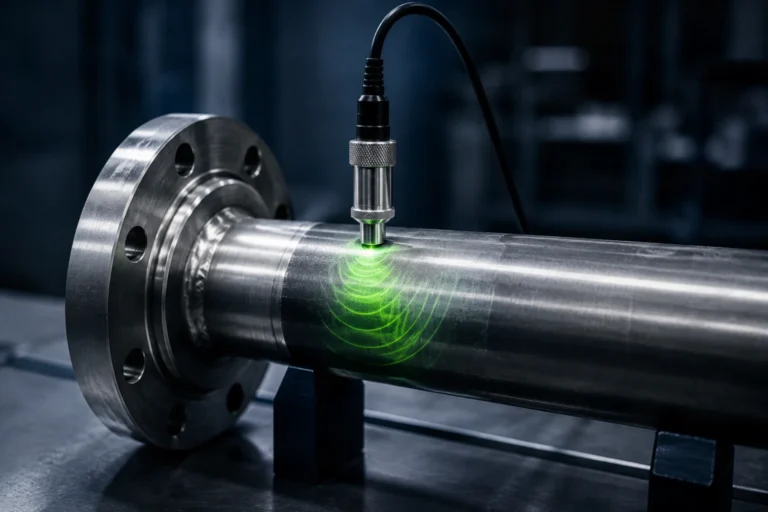
Stage 5 , Non-Destructive Testing (NDT) Magnetic particle inspection (MPI) or liquid penetrant inspection (LPI) confirms surface and near-surface integrity after coating. For safety-critical downhole components, NDT is not optional , it is the final gate before a component enters the supply chain. The British Institute of Non-Destructive Testing (BINDT) and ASNT frameworks both require operator certification for safety-critical NDT, which Accurate Edge holds for MPI and LPI on oil and gas components.
Stage 6 , CMM Dimensional Verification Final check against drawing on our coordinate measuring machine. Full inspection report issued with component. For components entering an API Monogram supply chain, this report travels with the component through every stage of downstream assembly.
Neither gun drilling alone nor honing alone delivers what the complete workflow achieves. The processes work in sequence , each one building on the precision the previous one established. At Accurate Edge, all six stages happen in-house in Sharjah, under one quality system, with one set of documentation, and no external transfers.
Gun Drilling in Difficult Materials: What Changes
Inconel 718 and 625: High work-hardening rate, low thermal conductivity, and tendency to build up on cutting edges. Coolant pressure must be higher than for steel. Feed rates must be lower. Tooling must be fresh , a worn guide pad on Inconel will allow bore deviation to accumulate faster than in any other common downhole alloy. Direct surface finish Ra 0.6–1.0μm. Subsequent honing achieves Ra 0.2μm or better.
Super Duplex 2507: High strength, high work-hardening, abrasive chip formation. Controlled feed rates are essential to avoid work-hardening the bore wall ahead of the cutting tip. This is the primary material for UAE wellhead and Christmas tree components in Gulf sour service environments. The TWI (The Welding Institute) technical guidance on super duplex machining confirms that internal coolant delivery is non-negotiable for deep bores in this alloy family.
Titanium Grade 5 (Ti-6Al-4V): Low thermal conductivity means heat concentrates at the cutting tip. High coolant pressure and sharp carbide tooling are essential. Titanium is increasingly specified for lightweight downhole tools and aerospace structural components where both weight reduction and corrosion resistance are required.
Hardened Steel (40+ HRC): Gun drilling on pre-hardened material is possible with correct carbide grade selection. For components where post-drill heat treatment would cause unacceptable dimensional change , particularly valve seats and precision bore assemblies with tight final tolerances , drilling pre-hardened stock eliminates that risk entirely.
Why Source Gun Drilling Locally in the UAE?
Lead Time – Days, Not Weeks
Sending components to a gun drilling specialist in Europe or India and returning them for subsequent operations adds 2–4 weeks to the manufacturing schedule at minimum. For operators and EPCs working to rig delivery schedules, that gap is a real cost , not just an inconvenience.
Local gun drilling in UAE, performed in-house after CNC machining at the same Sharjah facility, is measured in days. The component does not leave the building between turning, gun drilling, honing, and ENP , which means no re-inspection at goods-in, no handling damage risk, and no schedule uncertainty from international freight.
API Audit Chain Integrity
For API-certified supply chains, the customer’s right-to-audit extends to every process in the chain. If gun drilling is subcontracted abroad, auditing it is expensive and often impractical. In-house UAE capability keeps the entire audit chain local, accessible, and audit-ready , directly supporting the requirements of API Q1, API Q2, and API Monogram certification programmes. The API Monogram Programme explicitly addresses subcontracted special processes and the documentation requirements that apply to them.
Chain of Custody and Dimensional Risk
Precision components handled between facilities accumulate dimensional risk, handling damage, and foreign object debris exposure at every transfer point. A component that leaves a CNC turning setup at tight tolerance and travels to an external gun drilling supplier , then returns to a honing operation , has been handled four times unnecessarily. In-house processes eliminate that entirely.
MENA Supply Chain Concentration
Dubai and Sharjah industrial zones , DIP, Jebel Ali, Hamriyah , concentrate oil and gas component manufacturing for the GCC and broader MENA region. Machining companies in UAE with full deep hole drilling capability in-house remove weeks from GCC project schedules and keep supply chains within reach of customer audit teams based in Abu Dhabi, Muscat, and Doha.
Frequently Asked Questions:
Q: What is gun drilling used for in oil and gas?
Gun drilling produces long, straight, accurate bores in downhole tool mandrels, valve bodies, wellhead components, hydraulic manifolds, pump shafts, and any oil and gas component where bore depth-to-diameter ratio exceeds 10:1 and standard drilling cannot maintain the required straightness or surface finish. It is the standard process for safety-critical bore production in Inconel, super duplex, and titanium components across the GCC.
Q: What is the difference between gun drilling and deep hole drilling?
Deep hole drilling is the general category , any process for holes with depth-to-diameter ratios above 10:1. Gun drilling is one specific deep hole drilling method, optimised for diameters of 2–50mm where maximum precision and straightness are required. BTA drilling is another deep hole drilling method, better suited to larger diameters and higher production volumes. See Accurate Edge deep hole drilling and boring services.
Q: Can gun drilling be performed on Inconel 718 and super duplex 2507?
Yes , with correct tooling, coolant pressure, feed rate, and cutting parameters. Gun drilling is performed routinely on Inconel 625, Inconel 718, super duplex 2507, and titanium in UAE oil and gas component manufacturing. These materials require more controlled parameters than standard steel but present no fundamental barrier for a properly equipped operation with the right process knowledge.
Q: What is the maximum depth achievable with gun drilling?
Gun drilling can produce holes to 2,000mm or more depending on bore diameter and material. For UAE oil and gas component bores in the 10–40mm range, depths of 300–800mm are routinely achievable. Depth-to-diameter ratios of 100:1 or greater are possible in favourable materials.
Q: Does gun drilling require a separate machine or can it be done on a CNC machining centre?
Both options exist. Dedicated gun drilling machines offer the highest spindle rigidity and coolant pressure consistency for the most demanding bores. CNC machining centres equipped with high-pressure coolant systems and deep hole drilling tooling can perform gun drilling effectively for most oil and gas component bore requirements in the 8–50mm range.
Q: What surface finish does gun drilling produce?
Direct from drilling in alloy steel and stainless steel: Ra 0.4–0.8μm. In Inconel and super duplex: Ra 0.6–1.2μm is typical. Subsequent honing refines the bore surface to Ra 0.1–0.2μm where required for sealing interfaces or sliding fits.
Q: How does gun drilling relate to ENP coating?
Gun drilling produces the bore geometry. Where the bore is in corrosive service, electroless nickel plating is applied after drilling and honing to protect the bore wall. Both processes must operate under the same quality system for safety-critical components , which is why in-house capability at a single certified facility matters.
Q: What is the difference between gun drilling and BTA drilling?
Gun drilling uses an external V-flute for chip evacuation and is optimised for 2–50mm precision bores. BTA drilling evacuates chips internally through the drill body and is better suited to diameters of 20–200mm+ at higher production volumes. For UAE oil and gas downhole component bores , typically 8–40mm in exotic materials at low-to-medium volumes , gun drilling is the correct choice in nearly all cases.
Q: Is Accurate Edge API certified for gun drilling in the UAE?
Accurate Edge holds API Monogram certification. Gun drilling, honing, ENP coating, and NDT inspection are all performed under the same certified quality system at our Sharjah facility, with full traceability and documentation for API supply chain requirements.
Q: Why is gun drilling called gun drilling?
The process was developed for manufacturing rifle and artillery barrels , where producing a long, straight, accurate bore in hard metal was a direct functional requirement with measurable consequences. The tooling and process principles that solved that problem transferred directly to precision industrial manufacturing, and the name stayed with them.
Key Takeaways
Gun drilling is the standard process for precision bores with depth-to-diameter ratios above 10:1 in oil and gas components. Straightness deviation under 0.05mm per 300mm depth , not achievable with conventional drilling beyond a 5:1 ratio.
For UAE oil and gas procurement: gun drilling for 2–40mm precision bores in difficult materials at low-to-medium volumes; BTA for larger diameter, higher-volume, less stringent applications.
The optimal deep bore workflow: CNC machining→gun drilling→honing→ENP coating→NDT→CMM verification – all in-house, under one API quality system, in Sharjah.
Local UAE gun drilling eliminates 2–4 weeks of external transfer lead time, maintains API audit chain integrity, and removes the dimensional and handling risk introduced by external subcontracting across the GCC supply chain.