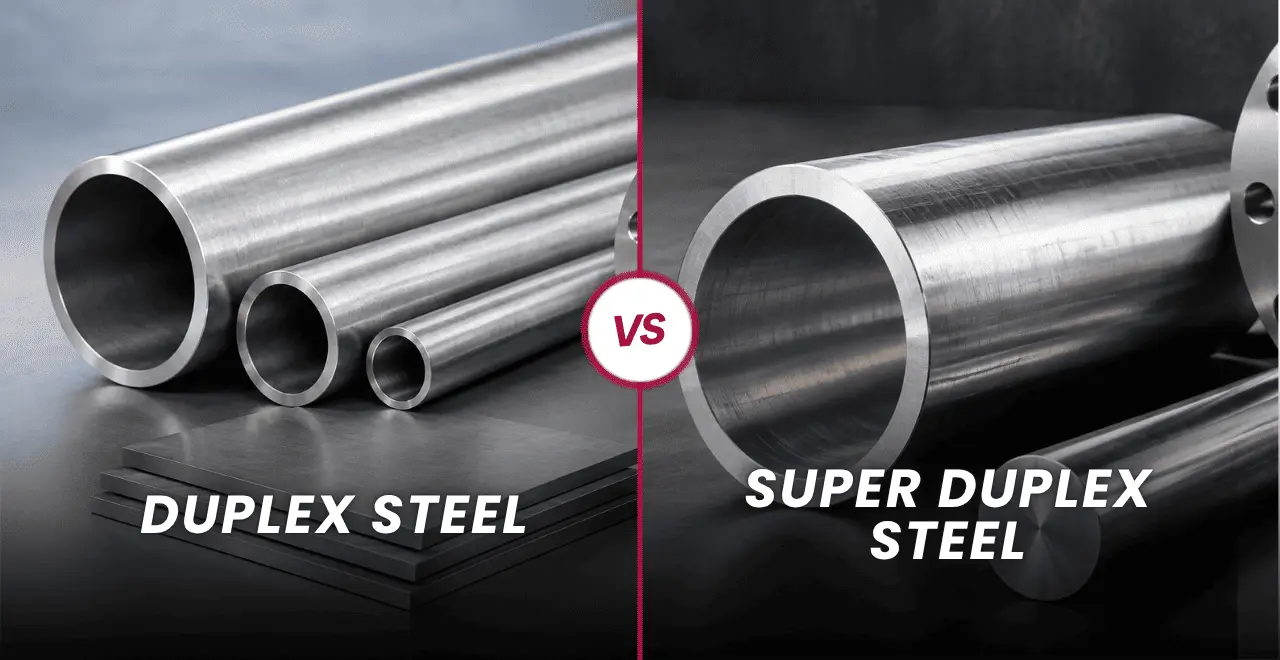

Quick Answer: The core difference between Duplex and Super Duplex Steel lies in chromium, molybdenum, and nitrogen content. Both are mixed austenitic-ferritic alloys, but Super Duplex carries a Pitting Resistance Equivalent Number (PREN) above 40, compared with roughly 28 to 38 for standard Duplex. This higher alloying content makes Super Duplex the preferred choice for aggressive, chloride-heavy environments such as offshore platforms, while standard Duplex remains well suited to general heavy-duty industrial applications at a lower material cost.
Demand for high-strength, corrosion-resistant alloys has risen steadily across the UAE’s industrial sectors. Offshore platforms in the Gulf, coastal desalination plants, and inland petrochemical facilities all specify materials capable of withstanding chloride exposure, high pressure, and mechanical load, frequently in combination.
Duplex and Super Duplex stainless steels have become the standard specification for much of this work. Selecting the correct grade, however, is rarely as straightforward as the datasheets suggest.
This guide sets out the practical Duplex vs Super Duplex Stainless Steel comparison: what distinguishes the two grades, where each is best applied, and what to expect when machining them.
Understanding the Microstructure: The Basics
Before comparing the two grades directly, it is worth clarifying what “duplex” refers to in metallurgical terms.
A duplex stainless steel takes its name from its microstructure, which consists of a roughly 50/50 mix of austenitic and ferritic stainless steel. This is uncommon among stainless steels, most of which are predominantly one phase or the other.
Austenitic grades, such as the widely used 304 and 316, offer strong corrosion resistance and ductility, but comparatively modest strength. Ferritic grades provide higher strength and improved resistance to stress corrosion cracking, though with reduced ductility and toughness.
Duplex and super duplex material combine both structures within a single alloy, delivering the advantages of each. The ferritic phase raises tensile strength well above that of standard austenitic stainless steel, often close to double. The austenitic phase preserves ductility and general corrosion resistance, keeping the material workable rather than brittle.
It is this dual-phase structure that allows duplex grades to achieve a combination of properties that neither a fully austenitic nor a fully ferritic steel could deliver on its own.
This balance is achieved deliberately rather than incidentally. Mills control the phase ratio carefully through alloy composition and heat treatment, targeting that even split because it produces the specific properties engineers require: strength comparable to certain carbon steels, corrosion resistance approaching premium austenitic grades, and superior resistance to stress corrosion cracking relative to either phase alone.
Where this balance is not properly controlled during production, the resulting material can lean too far towards one phase, compromising either strength or corrosion resistance. For this reason, duplex and super duplex material should be sourced from established mills with rigorous process control rather than procured as an undifferentiated commodity.
Why This Matters More in Gulf Conditions
This comparison carries particular weight in the UAE, given local seawater and climatic conditions.
Gulf seawater is both warmer and more saline than the majority of the world’s oceans, which intensifies chloride-driven corrosion mechanisms, particularly pitting and crevice attack, relative to temperate coastal environments. High ambient onshore temperatures further accelerate most corrosion reactions, creating a demanding operating environment for metal components exposed to seawater, brine, or process chemicals over extended service periods.
This is the operating context in which offshore operators, desalination engineers, and petrochemical project managers across the region specify duplex and super duplex material.
A component that would perform reliably for decades in a milder climate can fail within a few years in the Gulf if under-specified for the actual chloride load and temperature involved. The Duplex vs Super Duplex Steel decision is therefore a matter of asset lifespan and lifecycle maintenance cost, not a theoretical distinction.
Duplex Steel vs Super Duplex Steel Comparison (Quick Reference Table)
The table below summarises the key Duplex Steel vs Super Duplex Steel Comparison points relevant to project specification.
| Feature | Standard Duplex Steel (2205) | Super Duplex Steel (2507) |
| PREN Value | 28 to 38 | Above 40 |
| Corrosion Resistance | High | Extremely high (harsh chemical and marine environments) |
| Tensile Strength | High | Approximately 20% higher than standard Duplex |
| Cost | Cost-effective for standard industrial use | Higher initial material cost |
| Machinability | Moderate difficulty | High difficulty, requires specialised CNC capability |
Industry Applications: Which One Does Your Project Need?
Once the underlying metallurgical difference is understood, material selection typically comes down to three factors: operating environment, budget, and mechanical load.
When to choose Standard Duplex?
2205 is well suited to water treatment plants, structural architectural applications, general chemical processing, and food production facilities, environments requiring genuine strength and reliable corrosion resistance, but without sustained exposure to high chloride concentrations.
When to choose Super Duplex?
2507 justifies its premium in offshore oil and gas platforms, subsea components, desalination plants, and petrochemical piping, where continuous seawater exposure, elevated chloride concentration, and mechanical stress occur simultaneously. Standard Duplex was not designed to withstand this combination indefinitely.
A concise decision framework:
- Is the component subject to ongoing exposure to seawater or high-chloride process fluid? Super Duplex is the appropriate specification.
- Is budget a significant constraint within a moderately, rather than severely, corrosive environment? Standard Duplex is typically sufficient.
- Does the application combine high mechanical load with corrosion exposure, such as subsea fasteners or high-pressure piping? Super Duplex’s higher tensile strength justifies the additional cost.
- Is the application general industrial or architectural in nature, without sustained chloride exposure? Standard Duplex is the more economical and appropriate choice.
Partner with Accurate Edge for Precision Manufacturing
Demanding materials require a manufacturing partner with established capability in handling them, not one developing that expertise on a client’s production run.
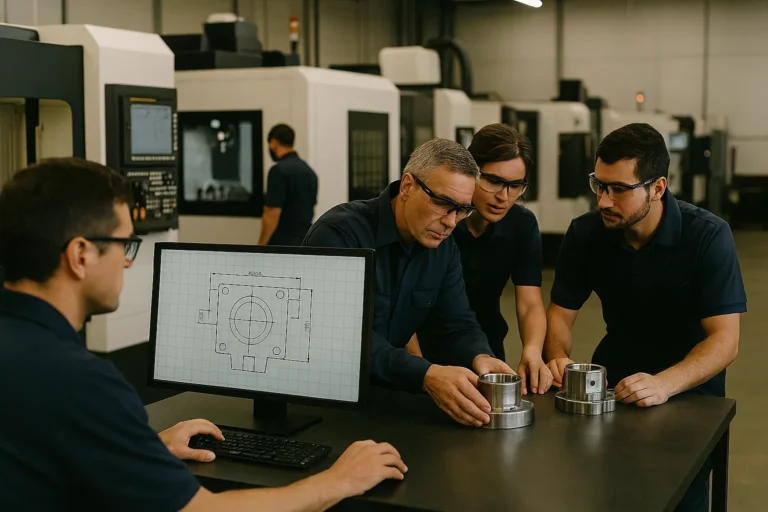
At Accurate Edge, precision CNC machining of demanding alloys, including Duplex and Super Duplex stainless steel, forms a core part of our service to the Middle East’s oil, gas, and marine sectors. Our team has substantial experience managing the work hardening, heat generation, tool wear, and tight tolerances that offshore and subsea components consistently require.
Our tooling strategy, coolant systems, and machine rigidity are configured specifically for this class of work, ensuring components meet specification on the first production run rather than after costly rework.
Whether you are sourcing components for an offshore platform, a desalination plant, or petrochemical piping infrastructure, our engineering team is available to discuss material selection and machining requirements ahead of production.
Contact us through accurateedgeuae.com to request a quotation or speak with our engineering team about your next Duplex or Super Duplex machining project.
Frequently Asked Questions (FAQs)
Is Super Duplex steel magnetic?
Yes. Both Duplex and Super Duplex steels contain a substantial ferritic phase within their microstructure, which renders them magnetic, unlike fully austenitic stainless steels such as 304 or 316, which are generally non-magnetic or only weakly so.
Is Duplex stainless steel stronger than 316L?
Yes, significantly so. Duplex grades such as 2205 typically deliver close to double the tensile strength of 316L, owing to the ferritic phase within the microstructure. Duplex also demonstrates superior resistance to chloride stress corrosion cracking, one of the more common failure mechanisms affecting 316L in chloride-rich environments.
Why is Super Duplex Steel CNC machining so difficult?
Super Duplex work-hardens rapidly under cutting pressure and generates significant heat due to its low thermal conductivity, both of which accelerate tool wear where the process is not tightly controlled. The alloy also demands substantial cutting force, requiring CNC equipment with genuine rigidity to prevent vibration, together with carbide tooling and high-pressure coolant to manage heat and chip evacuation effectively.
What is the cost difference between Duplex and Super Duplex steel?
Super Duplex commands a notably higher material cost, driven by its increased chromium, molybdenum, and nickel content. Machining costs are typically higher as well, reflecting the specialised tooling and more conservative cutting parameters required.
Where the operating environment genuinely warrants Super Duplex, however, this additional upfront investment is generally considerably lower than the cost of premature component failure in service.