
Here’s the good news up front: there’s no wrong answer when it comes to MIG vs TIG Welding, just a right answer for your specific job. Both processes are genuinely excellent at what they do, and once you understand where each one shines, picking between them becomes a lot easier than it looks on paper.
For fabricators, engineers, and project managers across the UAE, this decision comes up constantly. MIG welding vs TIG welding really comes down to what you’re building, what material you’re working with, and how much precision the job calls for. This guide walks through how each process works, where they genuinely differ, and how to choose with confidence for your next project.
What Is MIG Welding?
MIG (Metal Inert Gas) welding, technically known as Gas Metal Arc Welding (GMAW), has earned its reputation as one of the most popular welding processes in industrial fabrication, and it’s easy to see why once you watch it in action.
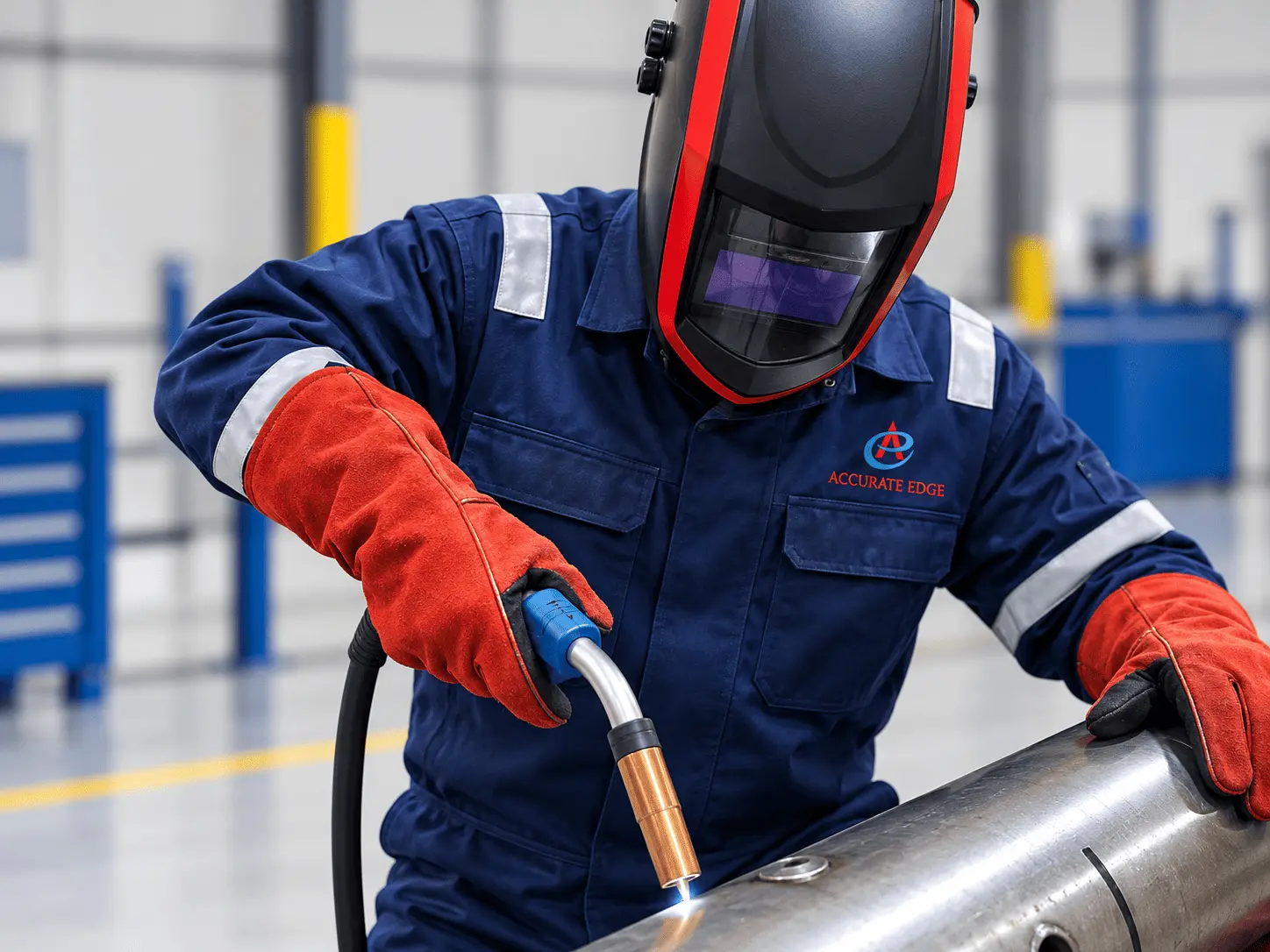
How MIG welding works
A continuously fed wire electrode runs through the welding gun, melting on contact with the base metal to form the weld. A shielding gas, usually argon or a CO2 blend, flows around the arc to keep the molten weld pool protected from the surrounding air.
Advantages of MIG welding
It’s fast, genuinely approachable for newer welders, and produces clean, consistent welds along long joints, which makes it a great fit for high-volume production work. The continuous wire feed also means fewer stops and starts, keeping productivity humming along nicely.
Limitations of MIG welding
It offers a bit less precision than TIG welding, and it’s not always the best match for very thin materials, where the heat can warp or burn through the base metal. It also doesn’t love windy or outdoor conditions, since the shielding gas can drift away from the weld pool.
Common applications
MIG welding is a favourite for automotive manufacturing, general fabrication, structural steel work, and pretty much any high-volume production environment where speed really matters.
What Is TIG Welding?
TIG (Tungsten Inert Gas) welding, or Gas Tungsten Arc Welding (GTAW), takes a more deliberate, hands-on approach, and the results speak for themselves.
How TIG welding works
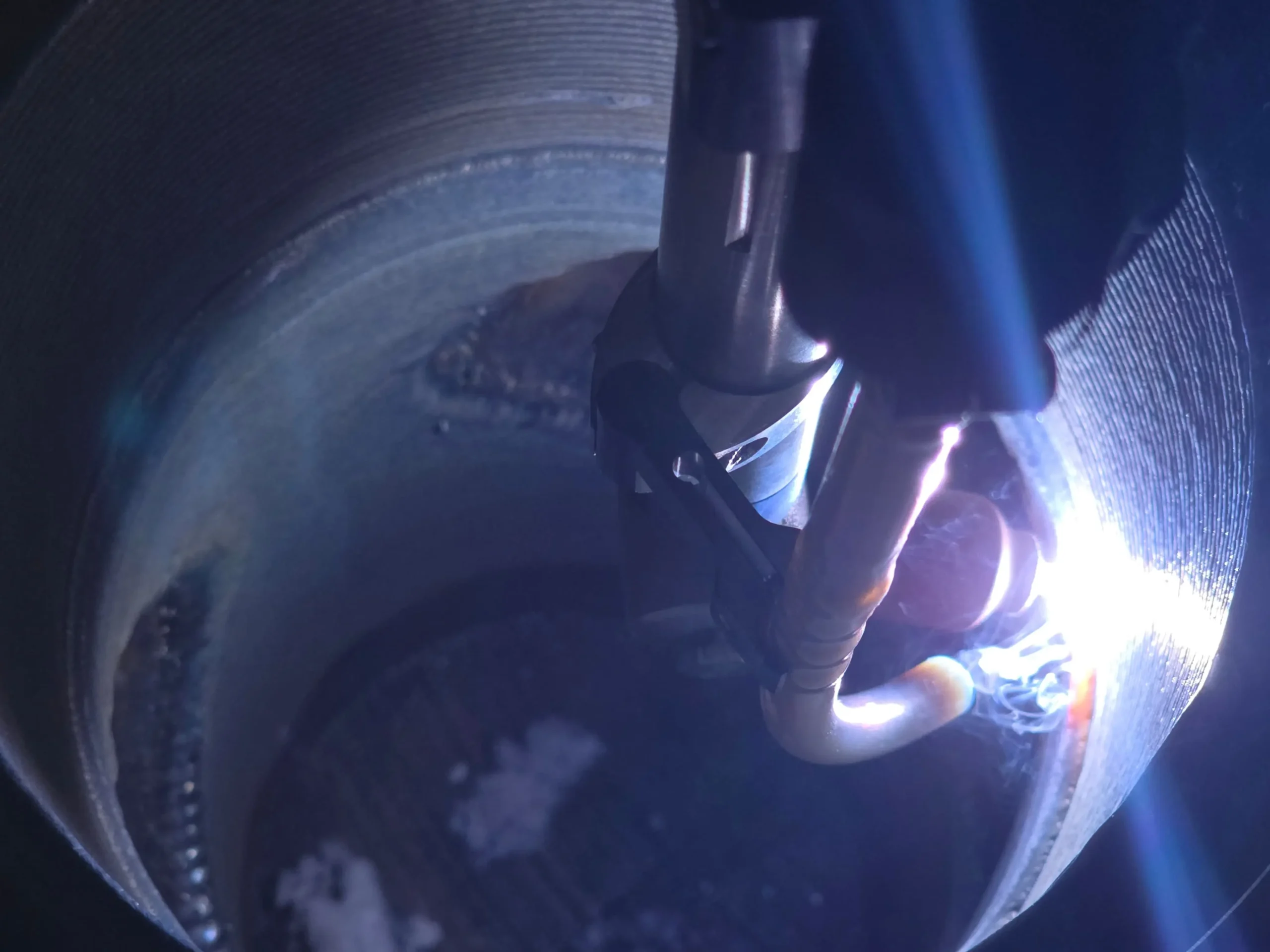
A non-consumable tungsten electrode creates the arc, while the welder feeds filler metal into the weld pool separately, by hand, when needed. Argon shielding gas protects the weld area throughout, with precise foot pedal or torch control helping manage heat input along the way.
Advantages of TIG welding
It delivers wonderfully precise, clean, and visually refined welds. It’s particularly well suited to thin materials and jobs where appearance matters just as much as strength.
Limitations of TIG welding
It’s noticeably slower than MIG welding and asks a bit more of the operator. The two-handed technique, torch in one hand, filler rod in the other, takes real practice to get comfortable with, which also makes it more labour-intensive and a little pricier per metre of weld.
Common applications
TIG welding is the process of choice for aerospace components, piping systems, precision fabrication, and any application where weld quality and appearance genuinely can’t be compromised.
MIG vs TIG Welding: Key Differences
Once you see where these two processes actually diverge, it becomes much clearer why one so often wins out for a particular job.
Welding Speed
MIG welding is considerably faster, thanks to its continuous wire feed and minimal interruptions. TIG welding takes things slower by design, since the welder is manually feeding filler metal while controlling the arc, a trade-off made happily in exchange for more control.
Weld Quality & Precision
TIG welding takes the win here, and it’s not close. The control it offers produces cleaner, more precise welds with minimal spatter, which is exactly why it’s the go-to for critical or highly visible joints.
Material Thickness
MIG welding generally performs better on medium to thick materials, where its higher heat input and deposition rate work in its favour. TIG welding is the stronger pick for thin materials, where careful heat control keeps burn-through at bay.
Skill Level
MIG welding is noticeably easier to pick up, which explains why mig vs tig welding which is easier is such a popular search for anyone new to welding. TIG welding has a steeper learning curve and usually rewards a more experienced hand with consistent results.
Weld Appearance
TIG welding produces a beautifully neat, uniform bead, often with no need for secondary finishing at all. MIG welds tend to carry a bit more texture and may want some cleanup where appearance really counts.
Filler Metal
MIG welding feeds filler metal automatically through the gun. TIG welding asks the welder to feed filler metal by hand, which adds a layer of skill but also hands over more control.
Shielding Gas
MIG welding commonly uses argon-CO2 blends, depending on the material. TIG welding almost always sticks with pure argon, which supports the fine control and clean arc the process is known for.
Cost & Productivity
MIG welding tends to be more cost-effective for high-volume work, thanks to its speed and lower labour time per weld. TIG welding costs a little more per metre, given the slower pace and extra skill involved, though that investment is often well worth it for the precision and quality you get back.
MIG vs TIG Welding Comparison Table
| Factor | MIG Welding | TIG Welding |
| Speed | Fast | Slower |
| Precision | Moderate | Excellent |
| Ease of Learning | Easier | More difficult |
| Weld Appearance | Good, may need cleanup | Clean, refined finish |
| Best Material Thickness | Medium to thick | Thin to medium |
| Filler Metal | Automatic wire feed | Manual feed |
| Shielding Gas | Argon-CO2 blends | Pure argon |
| Cost per Metre | Lower | Higher |
| Typical Skill Level | Beginner to intermediate | Intermediate to expert |
MIG vs TIG Welding for Different Materials
Stainless Steel
MIG vs TIG welding for stainless steel is one of the comparisons we get asked about most, and TIG generally comes out on top here. It gives better control over heat input, which helps prevent warping and discolouration, and produces the clean, corrosion-resistant welds stainless steel applications usually call for. That said, MIG welding is still a perfectly good option for thicker stainless sections or high-volume work where speed matters more than a flawless finish.
Aluminium
Both processes handle aluminium well, but TIG welding is usually the preferred route for thinner aluminium sheet and precision work, thanks to its excellent heat control. MIG welding, using a spool gun to manage aluminium’s soft wire, is a great choice for thicker sections and faster production runs.
Carbon Steel
Carbon steel is forgiving enough that both processes genuinely shine. MIG welding tends to be the go-to for structural and high-volume carbon steel fabrication, given its speed, while TIG welding steps in when appearance or precision really needs to take centre stage.
Copper & Other Non-Ferrous Metals
TIG welding is generally the better fit for copper and other non-ferrous metals, since its precise heat control helps manage these materials’ high thermal conductivity without unwanted heat spread or distortion.
MIG vs TIG Welding Based on Material Thickness
Thin Materials
For thin sheet metal, TIG welding is almost always the safer bet. Its controlled heat input keeps burn-through, warping, and distortion well in check, which thin materials are especially prone to under MIG welding’s higher heat.
Medium-Thickness Materials
This is where the decision gets genuinely interesting and project-specific. MIG welding brings speed and efficiency to the table, while TIG welding brings superior quality and control. The right call usually comes down to how much you’re prioritising production volume versus finish and precision.
Thick Materials
MIG welding typically performs better on thick materials, since its higher deposition rate fills joints faster without giving up structural integrity. TIG welding can still handle thick sections, but the slower pace makes it a less practical fit for large-scale structural work.
MIG vs TIG Welding for Different Applications
Manufacturing & Fabrication
General manufacturing and fabrication work tends to favour MIG welding, where speed and consistent output across long production runs matter more than a flawless finish on every single joint. Many of these components are also machined before or after welding, so welding is often paired with precision CNC machining services.
Oil & Gas
Oil and gas applications often call on both processes, depending on the component. TIG welding handles critical piping and pressure-containing welds where failure simply isn’t an option, while MIG welding takes care of structural and less critical fabrication efficiently. Critical welds in these environments are usually followed by post weld heat treatment to relieve residual stresses.
Aerospace
Aerospace work leans heavily towards TIG welding, thanks to the exceptional precision, clean welds, and tight quality control the industry rightly demands, along with the thinner materials commonly used in aircraft structures.
Automotive
Automotive manufacturing relies heavily on MIG welding for body panels, frames, and high-volume assembly line work, where speed and repeatability keep the whole production line moving smoothly.
Pipe & Tube Welding
TIG welding is the preferred choice for pipe and tube welding, especially for the root pass, where precision and a clean, defect-free weld are genuinely critical to the integrity of the system. MIG welding often steps in for fill and cap passes on thicker pipe, speeding up the overall process nicely.
Repair & Maintenance
Repair and maintenance work often calls for TIG welding’s precision and versatility, especially on thin or delicate components, though MIG welding remains a solid choice for faster structural repairs where appearance isn’t the top priority. For wear-resistant surfaces on heavily used parts, specialised processes such as carbide welding are also used.
MIG vs TIG Welding: Which Process Should You Choose?
Here’s the honestly reassuring part: there’s no single right answer, and that’s actually a good thing. The right process simply depends on your material, thickness, required finish, and production volume.
If speed and productivity are what you need most, particularly for medium to thick materials in high-volume production, MIG welding is usually your friend. If precision, weld quality, and appearance matter more, especially on thin materials or stainless steel, TIG welding is generally well worth the extra time and cost.
It’s also worth tackling mig vs tig welding which is stronger head-on, since it comes up a lot. Both processes can absolutely produce strong, structurally sound welds when done right. Weld strength has far more to do with proper technique, suitable filler metal, and correct heat input than with the process itself. TIG welding often produces fewer defects thanks to its precision, which can give it a slight edge in critical applications, but a well-executed MIG weld is more than strong enough for the vast majority of structural work.
Frequently Asked Questions
Is MIG or TIG welding stronger?
Both can produce strong, reliable welds when performed correctly. TIG welding’s precision tends to mean fewer defects, giving it a small edge in critical, high-stakes applications, but a properly executed MIG weld holds up beautifully for most structural and industrial work.
Is MIG or TIG welding easier to learn?
MIG welding is generally the easier one to pick up, since the wire feeds automatically and the technique is more forgiving for beginners. TIG welding asks you to coordinate the torch and filler rod separately, which takes a fair bit more practice to master, but is very rewarding once it clicks.
Which is better for stainless steel, MIG or TIG welding?
TIG welding is usually the better choice for stainless steel, thanks to its superior heat control, which helps prevent warping and discolouration while producing a cleaner, more corrosion-resistant weld. MIG welding remains a solid option for thicker stainless sections or higher-volume work.
Can MIG and TIG welding be used on the same project?
Yes, and it’s actually quite common, and a smart approach too. Many fabrication and oil and gas projects use both processes together, TIG for critical, precision joints and MIG for faster structural or less critical work, giving you the best of both worlds on a single job.
Get Professional Welding Support in the UAE
Choosing between MIG and TIG welding is only part of the equation. Getting a consistently strong, correctly specified weld really comes down to the team and equipment behind it.
At Accurate Edge, our welding team works confidently with both MIG and TIG processes across stainless steel, duplex and super duplex alloys, aluminium, and carbon steel, supporting clients across the UAE’s oil and gas, marine, and industrial fabrication sectors. We take the time to assess each job individually, recommending the right process, filler metal, and technique for your specific material, thickness, and application, rather than defaulting to a one-size-fits-all approach. All work is backed by our quality and certifications, including our API Monogram licence.
Get in touch to request a quotation or have a chat with our team about your next welding project. We’d love to help.
Conclusion
MIG and TIG welding each bring something genuinely valuable to the table, and the best choice always comes back to the specifics of your project. MIG welding delivers speed and efficiency for high-volume, medium to thick material work, while TIG welding delivers the precision and finish that thin materials, stainless steel, and critical applications truly need. Understanding these differences, rather than just defaulting to habit, is what leads to stronger, better-finished, more cost-effective welds every single time.