
Behind every sturdy frame, pipe spool and storage tank is a weld that someone had to get right. The industrial zones and skyline of the UAE are built largely from joined steel, and the quality of those joints decides whether structures stay safe and equipment stays in service.
This guide explains how arc welding projects in Dubai work: the main processes, where each one is used, which defects to watch for and how to choose a dependable supplier. It is written for project managers, procurement teams and engineers who want clear answers before requesting a quotation.
Quick Answer: Arc welding joins metal by using an electric arc to melt the base material and a filler, forming a strong joint as it cools. The main processes are Stick (SMAW), MIG/MAG (GMAW), TIG (GTAW), flux-cored and submerged arc, and the right one depends on material, thickness, position and site conditions. For arc welding projects in Dubai, look for qualified welders, written procedures and proper inspection, especially where a joint carries load or pressure.
What Is Arc Welding and How Does It Work?
Arc welding is a fusion process that uses an electric arc between an electrode and the workpiece to melt metal so that it fuses into a single joint. It is the most widely used family of welding methods in industry, valued for its strength, its versatility and its ability to work on site as well as in a workshop.
How the Arc Creates a Weld
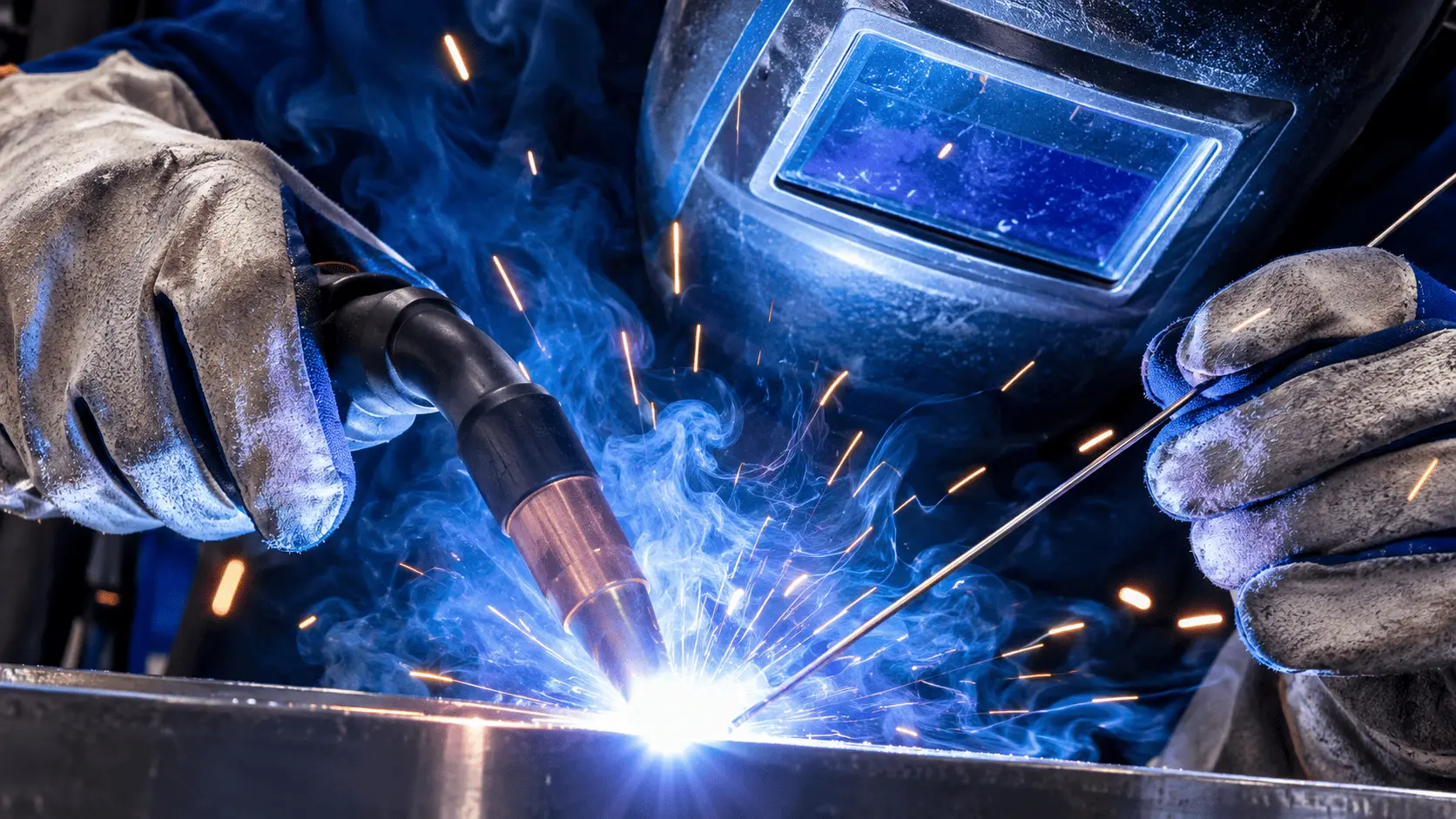
A power source supplies current to the electrode. When the electrode approaches the workpiece, an arc forms and produces intense heat that melts the joint edges and, in most processes, a filler metal. The molten pool then cools and solidifies into the weld.
Molten metal reacts with oxygen and nitrogen in the air, so every arc process includes some form of shielding. This may come from a flux coating, a shielding gas or a layer of granular flux. Good shielding protects the weld from porosity and brittleness.
Materials Commonly Arc Welded
Carbon and low-alloy steels, stainless steels, duplex grades and aluminium are all arc welded, though each needs the right process, filler and technique. Stainless and duplex steels need controlled heat input to protect corrosion resistance. Aluminium needs thorough cleaning and suitable shielding gas. The correct parameters come from the approved welding procedure, not from general guidance.
Main Arc Welding Processes
Five processes cover most industrial work, and each has a natural home.
Shielded Metal Arc Welding (SMAW or Stick)
Stick welding uses a flux-coated consumable electrode. The coating burns to form shielding gas and a protective slag layer, so no separate gas supply is needed. It is portable, tolerant of wind and well suited to site repairs, structural work and thick sections. The trade-offs are slag removal between passes and the need to keep low-hydrogen electrodes dry, which matters in Gulf humidity.
MIG and MAG Welding (GMAW)
MIG and MAG welding feed a continuous wire electrode through a torch while shielding gas protects the pool. MIG uses an inert gas and is common for aluminium, while MAG uses an active gas mix and is typical for steel. The process is fast, easy to automate and ideal for workshop fabrication. It is sensitive to draughts, so outdoor work needs wind protection.
TIG Welding (GTAW)
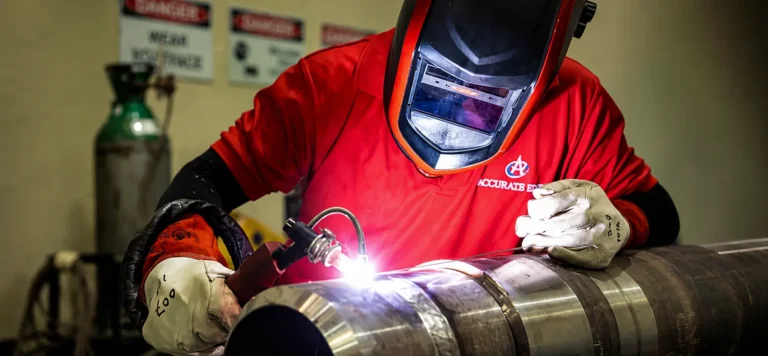
TIG welding uses a non-consumable tungsten electrode and an inert gas, usually argon, with filler added separately when needed. It gives precise control and clean, high-quality welds, which is why it is common for stainless steel, aluminium, thin sections and pipe root passes. It is slower than other processes and demands a skilled welder.
Flux-Cored Arc Welding (FCAW)
Flux-cored welding uses a tubular wire filled with flux. Some wires are self-shielded, while others also use an external gas. It offers high deposition rates and good performance on thicker material, so it is popular for structural steelwork and heavy fabrication. Expect slag and fumes, and plan for cleaning and ventilation.
Submerged Arc Welding (SAW)
Submerged arc welding buries the arc beneath a blanket of granular flux, giving deep penetration, high deposition and very little spatter. It is mostly automated and works best on flat or horizontal joints in thick plate, which suits tanks, pressure vessels, pipes and large beams. It is not practical for awkward positions or small jobs.
MIG vs TIG vs Stick: Choosing the Right Arc Welding Process
Choose Stick for site and repair work, MIG/MAG for productivity, TIG for precision, and flux-cored or submerged arc for thick, heavy sections.
| Process | Shielding | Strengths | Typical uses | Watch points |
| Stick (SMAW) | Flux coating | Portable, copes with wind and site conditions | Site repairs, structural steel | Slag removal, electrode storage |
| MIG/MAG (GMAW) | Shielding gas | Fast, easy to automate | Workshop fabrication, production | Needs wind protection and gas supply |
| TIG (GTAW) | Inert gas | Precise, clean welds | Stainless, aluminium, thin sections, pipe roots | Slower, high skill level |
| Flux-cored (FCAW) | Flux in the wire, with or without gas | High deposition, good on thick sections | Structural and heavy fabrication | Slag and fumes |
| Submerged arc (SAW) | Granular flux | Deep penetration, high output | Thick plate, tanks, pressure vessels | Mostly flat or horizontal positions |
Many projects combine processes. A pipe joint, for example, may use TIG for the root pass and Stick or flux-cored for the fill and cap.
Want a deeper comparison of the two most common processes? Read our guide: MIG vs TIG welding: differences, uses and how to choose
Where Arc Welding Is Used Across Dubai and the UAE
Arc welding is used wherever metal parts must be joined into strong, durable assemblies, and industrial welding services UAE buyers rely on it across almost every heavy sector.
Oil and Gas
Pipework, pressure vessels, skids, storage tanks and support structures call for qualified procedures and strict inspection. Corrosion-resistant alloys and detailed documentation are common requirements.
Safety reminder: welds in pressure-containing or load-bearing equipment must follow the applicable code and be approved by a qualified welding engineer or inspector.
Marine and Shipbuilding
Hulls, decks, offshore structures and repair work all depend on sound welds that resist salt, humidity and constant movement. Coastal conditions make weld quality and coating compatibility especially important.
Construction and Structural Steel
Beams, columns, trusses, platforms and frames are routinely arc welded, usually to structural steel codes such as AWS D1.1 or the equivalent named in the project specification.
Fabrication and Manufacturing
Machine frames, conveyors, tanks, brackets and process equipment are fabricated with arc welding in workshops that need both strength and repeatability.
Power, Water and Utilities
Boiler and piping systems, tanks and plant supports must handle continuous duty. Careful procedures and inspection help these welds last.
Maintenance, Repair and Shutdown Work
Cracked housings, worn shafts and damaged structures are often repaired by welding, saving the time and cost of full replacement. Fast mobilisation and clear planning matter during plant shutdowns.
Key Benefits of Professional Arc Welding Services Dubai
The main benefit is a strong, durable joint that performs under load, heat and vibration. Other advantages follow from that:
- Versatility across many metals, thicknesses and joint types
- Portability, because some processes work well on site
- Scalability from a single repair to repeat production
- Cost efficiency compared with replacing an entire component
- Repair capability that extends the life of expensive equipment
There is also a reliability benefit. When welding is done to an approved procedure by a qualified welder, the result is consistent and inspectable, which reduces the chance of costly rework or failure in service.
Limitations and Common Welding Defects
Arc welding is powerful, but it has limits. Heat can distort parts, thick sections may need preheating or post-weld heat treatment, and gas-shielded processes are sensitive to wind. The work also demands skilled welders. In the UAE, high humidity can dampen electrodes and fluxes, and summer heat is tiring for people working outdoors.
Most defects trace back to a handful of causes:
| Defect | Likely cause | Typical remedy |
| Porosity | Gas loss, moisture, contamination | Clean the joint, dry consumables, shield from wind, check gas flow |
| Lack of fusion | Low heat input, poor technique | Adjust parameters, improve joint preparation |
| Incomplete penetration | Narrow gap, low current, fast travel | Correct joint design and settings |
| Undercut | Excess current or speed, wrong angle | Reduce current or speed, correct the angle |
| Cracking | Hydrogen, high restraint, rapid cooling, wrong filler | Use specified preheat, low-hydrogen consumables, review procedure |
| Slag inclusions | Poor cleaning between passes | Clean thoroughly between passes |
| Distortion | Uneven heating, poor sequence | Balance the sequence, use fixtures, control heat input |
| Spatter | Wrong settings or gas mix | Adjust parameters, review gas |
Welding Codes, Inspection and Safety
Reliable welding follows written procedures and qualified people. A welding procedure specification (WPS), supported by a procedure qualification record, defines the parameters for a joint, and welders are qualified to match.
Common references include AWS D1.1 for structural steel, ASME Section IX for pressure work, and ISO 15614 and ISO 9606 for procedure and welder qualification. ISO 3834 sets quality requirements for fusion welding, and many workshops also work under ISO 9001. The project specification decides which applies.
Inspection starts with visual checks and may extend to dye penetrant, magnetic particle, ultrasonic or radiographic testing, depending on the requirement.
Safety is part of quality. Welding involves arc radiation, fumes, hot metal and fire risk, so look for proper protective equipment, ventilation or fume extraction, hot work permits and fire watch. For structural, lifting or pressure-related work, involve a qualified welding engineer.
How to Choose Reliable Arc Welding Dubai Providers
The right provider is the one that can prove qualified welders, follow written procedures and inspect its work, not simply the one with the lowest quote. Whether you are comparing one arc welding company in Dubai with another or looking more widely for Arc Welding UAE support, use this checklist.
| What to check | Why it matters | Question to ask |
| Welder qualifications | Proves competence for the process and position | Are your welders qualified to the required code? |
| Approved procedures | Ensures a repeatable method | Can you show an approved WPS for my material? |
| Process range | Matches the method to the job | Which processes do you run in house? |
| Inspection and NDT | Verifies the result | What inspection is done, and who signs it off? |
| Material and consumable control | Prevents wrong filler or damp electrodes | How do you store and trace consumables? |
| Capacity and lead time | Protects your schedule | How many welders are available, and how are delays reported? |
| Safety management | Reduces risk on site | Do you provide risk assessments and method statements? |
Visit the workshop if you can, and ask to see similar completed work. Be cautious of a quote far below the rest, because it can signal skipped inspection or substitute consumables.
Talk to Accurate Edge About Arc Welding Dubai Projects
If you have a drawing, a repair or a fabrication requirement, the team at Accurate Edge can review it with you and advise on the process, materials, inspection and the most practical way to deliver it. If you are comparing arc welding services Dubai options, a quick drawing review is a good place to start.
Our Arc Welding Capabilities:
- Processes offered: manual TIG welding (GTAW), gas metal arc welding (GMAW), fully automatic cladding on a Fronius ETR Speedclad 2.0 system, hard facing and precision brazing for complex assemblies.
- Materials welded: stainless steel, carbon steel and alloy steels, plus exotic alloys such as Monel and Inconel for TIG work.
- Codes and qualifications: work follows written welding procedure specifications (WPS) supported by procedure qualification records (PQR), with welders qualified to ASME Section IX. See our quality and certifications, including our API Monogram licence.
- Inspection and NDT: in-house non-destructive testing, including magnetic particle (MPI) and liquid penetrant (LPI) inspection, with high pressure testing also available.
- Workshop and site work: welding is carried out at our Dubai Investments Park facility.
Visit accurateedgeuae.com to send an enquiry, or call +971 4 885 8090.
Frequently Asked Questions
What is arc welding used for?
It is used to join metals in construction, oil and gas, marine, manufacturing, power and repair work. It suits everything from thin sheet to thick structural plate.
Which arc welding process should I choose?
It depends on the material, thickness, position and location. Stick suits site work, MIG/MAG suits fast fabrication, TIG suits precision and thin or stainless parts, and flux-cored or submerged arc suit heavy sections.
How do I choose an arc welding company in Dubai?
Check welder qualifications, approved procedures, inspection capability and safety management. Send a real drawing and see how clearly the company explains its approach.
What should I send when requesting an arc welding quotation in Dubai?
Send drawings, the material grade, thickness, quantity, applicable code and any inspection requirements. A note on where the part will be used also helps.
What do industrial welding services in the UAE typically cover?
They commonly cover fabrication, structural and pipe welding, repair work and inspection. The exact scope varies, so confirm it with each supplier.
Does hot and humid weather affect Arc Welding UAE projects?
Yes. Humidity can dampen electrodes and fluxes, and wind or heat can affect shielding and welder comfort. Good providers store consumables correctly and plan outdoor work around conditions.
Is arc welding safe?
It is safe when done by trained people with the right protective equipment, ventilation and fire precautions. Arc radiation, fumes and hot metal are real hazards, so never skip the safety steps.
Conclusion
Good welds are rarely noticed, and that is exactly the point. They hold, they seal and they keep structures and equipment working. Choosing the right arc welding provider in Dubai comes down to matching the process to the job, insisting on qualified people and approved procedures, and checking that the work is properly inspected.
Whether you need a single repair or a full fabrication package, a well-run team can deliver consistent results for Arc Welding UAE projects of every size. For any structural, lifting or pressure-related weld, involve a qualified welding engineer and follow the applicable code.
Ready to discuss your project? Speak with the Accurate Edge team today.