
Imagine finishing a precision component and, instead of cutting more material away, simply pressing the surface into a smoother, harder, more durable state. That is the idea behind roller burnishing, and it is one of the most efficient and quietly impressive finishing methods in modern manufacturing.
For engineers and buyers across the UAE’s oil and gas, hydraulics, automotive, and general engineering sectors, surface quality directly affects how long a component lasts and how well it performs. Roller burnishing offers a clean, fast, and reliable way to improve it. In this guide, we’ll walk through what it is, how it works, where it shines, and where it has limits, so you can decide with confidence whether it belongs in your next project.
What Is Roller Burnishing?
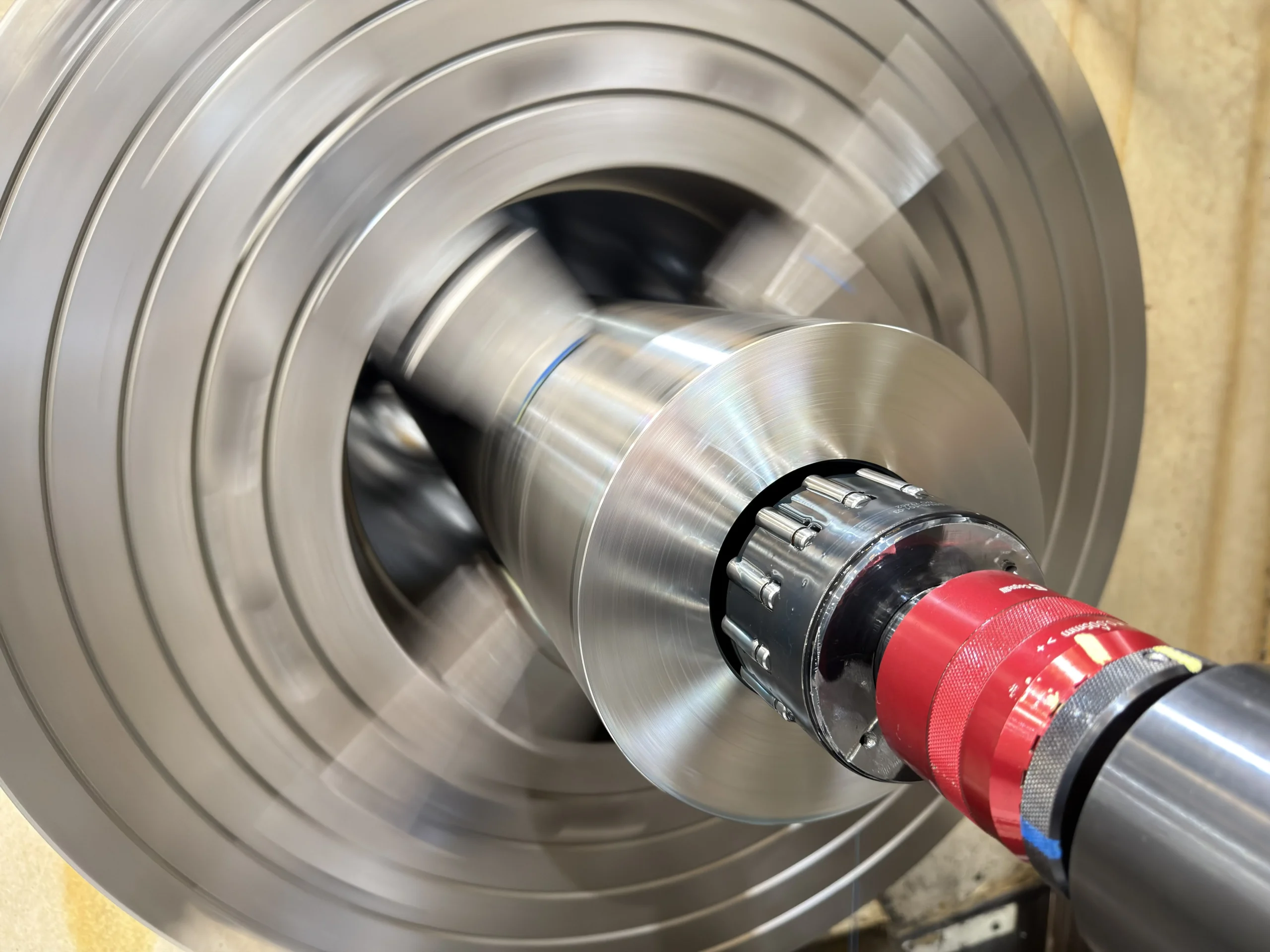
Roller burnishing is a cold-working finishing process in which hardened rollers or balls are pressed against a machined metal surface with controlled force. Rather than cutting or grinding, the tool smooths the surface by plastically deforming it. The tiny peaks left behind by turning, boring, or milling are pressed down into the valleys, leaving a smooth, compacted, mirror-like finish.
Because no material is removed, there are no chips, no abrasive particles, and no dust. What you get instead is a surface that is smoother, harder, and stronger than it was before.
How Does Roller Burnishing Work?
The roller burnishing process is refreshingly simple to understand, even though the engineering behind it is precise.
- Pre-machining: The part is first machined, usually by turning, boring, or reaming, to a controlled size and surface condition.
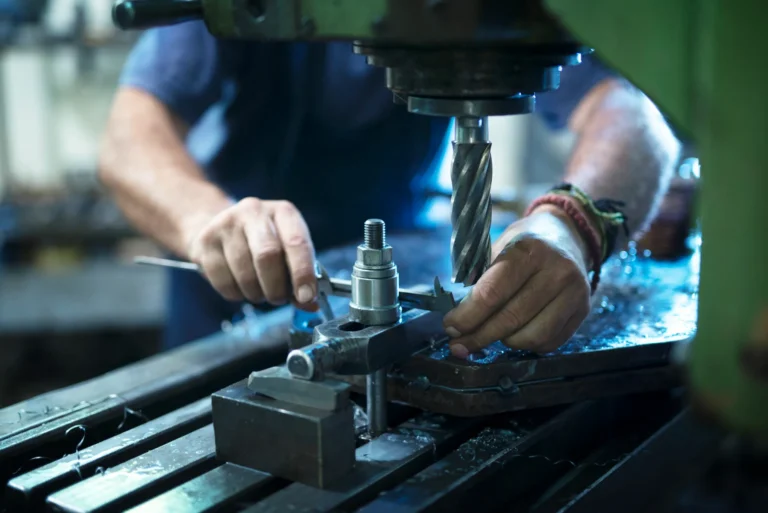
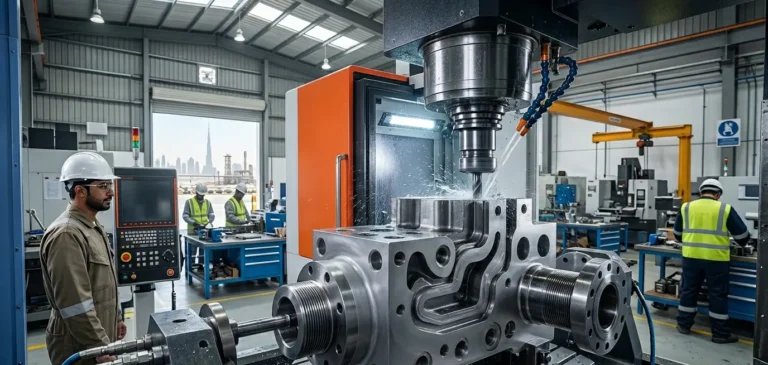
- Tool engagement: The burnishing tool, fitted with hardened and polished rollers or a ball, is brought into contact with the surface. It can be mounted on a lathe, a CNC machine, or a machining centre.
- Controlled pressure: The rollers press against the surface with enough force to exceed the yield strength of the material at its surface layer, but not so much that the part is damaged.
- Plastic flow: The surface peaks flow sideways into the valleys, flattening the profile and refining the finish.
- Work hardening: The top layer of the metal is compressed and strengthened, creating a hardened skin with beneficial compressive residual stress.
Most burnishing passes take only seconds, which is one reason the process is so popular in production environments. It is often carried out right on the same machine used for the earlier machining operations, which saves handling time and keeps parts accurately aligned.
Also read: CNC vs Conventional Machining: Which Is Right for Your Component?
Types of Roller Burnishing
Different part shapes call for different tools, and there are several well-established options:
- Internal burnishing: Used for bores, holes, and cylinders. Tools usually have a set of tapered rollers held in a cage that can be adjusted to the required size.
- External burnishing: Used for shafts, rods, pins, and other outside diameters. The tool applies pressure from outside the part.
- Face and shoulder burnishing: Designed for flat surfaces, shoulders, and fillets, such as the corners on a shaft.
- Taper and contour burnishing: For conical or shaped surfaces that need a consistent finish.
- Ball burnishing: Uses a hard ball, often supported by spring or hydraulic pressure, and is particularly suited to complex contours and flat areas.
Tools can also be rigid or spring-loaded. Spring-loaded tools help compensate for small variations in part size, which makes them a forgiving choice for many production jobs.
Roller Burnishing Benefits
The benefits are what make this process so appealing, and most of them come together in a single operation.
- Excellent surface finish: Roughness values can often be brought down to very fine levels, commonly in the range of 0.1 to 0.4 µm Ra, depending on the starting condition and the material.
- Improved wear resistance: The hardened, compacted surface stands up better to friction and sliding contact.
- Better fatigue life: The compressive residual stress created at the surface helps resist crack initiation, which is a big advantage for rotating and cyclically loaded parts.
- Enhanced corrosion resistance: A smoother, denser surface offers fewer places for corrosion to start.
- Tighter dimensional control: Burnishing can help hold consistent diameters from part to part.
- Speed and efficiency: Short cycle times and the ability to combine it with other machining steps cut production time.
- Clean process: There are no abrasives that can become embedded in the surface, and no swarf to manage.
- Lower cost per part: For the right volumes, it can replace grinding, honing, or polishing steps entirely.
As an added bonus, the improved roller burnishing surface finish often gives better sealing performance, which matters a great deal for hydraulic and pneumatic components.
Materials Suitable for Roller Burnishing
Roller burnishing works best on materials that are ductile enough to flow under pressure. Good candidates include:
- Aluminium and its alloys
- Brass, bronze, and copper
- Mild and low-alloy steels
- Stainless steels
- Many tool and alloy steels in softer conditions
As a general guide, standard tooling works well on materials up to around 40 HRC, and specialised tooling can extend that range for harder materials. Very brittle materials, such as some grades of cast iron, need extra care because they can flake or crack instead of flowing smoothly. If you are working with a less common alloy, a short trial on a sample piece is a sensible and inexpensive way to confirm the results.
Industrial Applications
Wherever a smooth, durable, accurately sized surface is needed, roller burnishing tends to be a natural fit. Common applications include:
- Hydraulic and pneumatic components: Cylinder bores, piston rods, and valve bodies that must seal reliably
- Oil and gas equipment: Valve components, pump parts, and sealing surfaces that face demanding service
- Automotive parts: Shafts, bearing seats, and engine and transmission components
- Aerospace: Landing gear parts, actuators, and precision fittings
- General engineering: Bushings, pins, spindles, and fluid-handling components
Roller Burnishing vs Other Finishing Processes
It helps to compare burnishing with the other finishing methods you may be considering. The big difference is that burnishing reshapes the surface rather than removing material from it.
Roller Burnishing vs Honing
This is one of the most common comparisons, especially for bores. Honing uses abrasive stones to remove a small amount of material and can correct geometry, such as roundness and straightness, while leaving a cross-hatch pattern that holds oil. Roller burnishing vs honing really comes down to goals. Burnishing is faster, cleaner, and creates a hardened, compressed surface, but it does not correct geometry, so the bore should already be well machined. Honing is a better choice when you need to fix form errors or want a specific cross-hatch pattern.
Quick Comparison Table
| Factor | Roller Burnishing | Honing | Grinding | Polishing |
| Material Removal | None | Small amount | Yes | Small amount |
| Surface Hardening | Yes, work hardening | No | No | No |
| Residual Stress | Compressive | Neutral | Can be tensile | Neutral |
| Geometry Correction | Limited | Good | Excellent | Limited |
| Cycle Time | Very short | Moderate | Longer | Often longer |
| Abrasive Embedding | None | Possible | Possible | Possible |
| Typical Use | Finishing and strengthening | Bores, form correction | High-accuracy sizing | Cosmetic or fine finish |
Factors Affecting Quality
Consistent results come from getting a handful of variables right:
- Pre-burnishing surface: A well-machined starting surface with uniform roughness gives the best outcome.
- Burnishing allowance: Only a small amount of interference is needed, and too much can damage the surface.
- Speed and feed: Moderate, steady speeds and appropriate feed rates keep the finish uniform.
- Burnishing force and number of passes: Enough pressure to flow the surface, without overworking it.
- Lubrication: A suitable coolant or oil reduces friction and prevents scoring.
- Tool condition: Rollers and balls must be clean, polished, and free from wear.
- Material properties: Hardness and ductility determine how the surface responds.
- Part rigidity and alignment: Good support and accurate alignment prevent taper, distortion, and chatter, particularly on thin-walled parts.
Limitations
Roller burnishing is a wonderful tool, and knowing its limits makes it even more effective:
- It does not remove material, so it cannot fix scratches, deep tool marks, or form errors such as out-of-roundness.
- It works best on ductile materials, and very hard or very brittle materials can be difficult.
- Over-burnishing can cause the surface to flake or peel.
- Thin-walled parts can distort under pressure if they are not properly supported.
- It needs a good pre-machined surface, so the earlier operations still matter.
- Tooling must be matched to the diameter and application, which can add some initial cost for small batches.
Common Problems and Troubleshooting
When something does not look quite right, the cause is usually easy to track down. Here are some common situations:
| Problem | Likely Cause | Typical Fix |
| Flaking or peeling surface | Over-burnishing, too much interference or too many passes | Reduce allowance and passes |
| Rough or uneven finish | Poor pre-machined surface, worn rollers, low pressure | Improve pre-machining, replace tool, adjust force |
| Chatter or spiral marks | Excessive feed, poor alignment, loose setup | Reduce feed, check alignment and rigidity |
| Part out of size | Incorrect allowance or elastic spring-back | Adjust burnishing size after a trial run |
| Scoring or seizing | Poor lubrication, debris on rollers | Improve lubrication, clean tool and workpiece |
| Taper or distortion | Misalignment or unsupported thin wall | Realign tool, add support |
Quality Measurement and Inspection
Verifying the result is just as important as achieving it. Typical checks include:
- Surface roughness measurement: A stylus profilometer measures parameters such as Ra and Rz, and material ratio curves can show how well the surface will bear load.
- Dimensional inspection: Air gauges, bore gauges, micrometers, and CMM equipment confirm diameter, roundness, and tolerance.
- Hardness testing: Confirms the work-hardening effect where it is specified.
- Visual and microscopic inspection: Checks for flaking, scoring, or other surface defects.
- Residual stress analysis: Specialist methods such as X-ray diffraction can verify compressive stress for critical aerospace or fatigue-sensitive parts.
Good inspection records give you confidence that every part meets the specification, batch after batch.
Also read: Preheating vs PWHT: Key Differences, Purposes and Applications
Is Roller Burnishing Suitable for Your Application?
If you are not sure whether burnishing is the right choice, a few simple questions can point the way:
- Is your material ductile enough, and within a workable hardness range?
- Do you need a fine surface finish, better wear life, or improved sealing?
- Is the part already machined to a good standard before finishing?
- Would shorter cycle times or a cleaner process help your production?
- Is geometry correction needed, or is the main goal surface quality?
If most of your answers are positive, roller burnishing is very likely a great fit.
Roller Burnishing in Precision Machining at Accurate Edge
At Accurate Edge, we see roller burnishing in precision machining as a smart way to deliver better surfaces and longer-lasting components without adding unnecessary steps. Our team reviews your drawing, material, and performance requirements, then recommends the most suitable finishing approach, whether that is burnishing, honing, or a combination of processes.
Get in touch through accurateedgeuae.com to request a quotation or talk with our engineers about your next project. We would be delighted to help.
Conclusion
Roller burnishing is a fast, clean, and cost-effective way to achieve an excellent surface finish while also strengthening the surface itself. It improves wear resistance, fatigue life, and sealing performance, all without removing material or introducing abrasives. While it works best on ductile materials and needs a good pre-machined surface, its benefits are hard to match for many shafts, bores, and sealing surfaces. With the right setup, tooling, and inspection, it can help your components perform better and last longer.
FAQs
What is roller burnishing used for?
It is used to produce a smooth, hardened, accurately sized surface on shafts, bores, valve parts, hydraulic components, and many other precision parts where finish and durability matter.
What surface finish can roller burnishing achieve?
Under good conditions, it commonly achieves roughness values of roughly 0.1 to 0.4 µm Ra, and sometimes finer, depending on the starting surface and the material.
Does roller burnishing remove material?
No. It is a cold-working process that reshapes the surface through plastic deformation, so no chips or dust are produced.
Is roller burnishing better than honing?
It depends on your goal. Burnishing is faster, cleaner, and hardens the surface, while honing can correct bore geometry and create a cross-hatch pattern. Many manufacturers choose based on the needs of the specific part.
What materials can be roller burnished?
Ductile metals such as aluminium, brass, bronze, copper, mild steel, low-alloy steel, and many stainless steels respond well. Very hard or very brittle materials are more challenging.
Can roller burnishing improve fatigue life?
Yes. The compressive residual stress it creates at the surface helps resist crack formation, which can extend the fatigue life of rotating and cyclically loaded components.
Can roller burnishing be done on a CNC machine?
Yes. Burnishing tools can be fitted to lathes, CNC machines, and machining centres, which often allows the process to be completed in the same setup as the earlier machining.