
A good part earns trust before it is ever installed. It slides into its bore, seals where it should and runs quietly for years. For engineers, buyers and maintenance teams across Sharjah, that reliability begins in the workshop, long before the part reaches site.
This guide explains how precision machining services in Sharjah work, what a capable workshop can do, where the finished parts are used and how to judge a supplier. It is written for plant managers, procurement teams and design engineers who want clear answers before they send out a drawing.
Quick Answer: Precision CNC machining services in Sharjah use computer-controlled mills, lathes and multi-axis machines to cut metal and plastic parts to tight, repeatable tolerances. They suit one-off spares, prototypes and production batches for oil and gas, marine, construction and general industry. The best results come from a workshop that reads drawings carefully, controls its process and inspects every critical dimension.
What Are CNC Machining Services in Sharjah?
Precision machining is the controlled removal of material from a solid block, bar or casting so that the finished part matches a drawing within agreed tolerances. In Sharjah, these services are delivered by workshops that combine CNC equipment, skilled machinists and inspection tools to turn engineering drawings into working components.
The word “precision” matters. It signals that dimensions, geometry and surface finish are held within limits that let parts fit, seal and wear as designed. A decorative bracket and a hydraulic valve body may both be machined, but only the second demands this level of control.
Many buyers start with a search for CNC machine shops in Sharjah. That is a sensible first step. The more useful question is which workshop can control the details your particular part needs.
How CNC Machining Works
CNC stands for computer numerical control. A designer builds a 3D model in CAD software, and a programmer uses CAM software to generate toolpaths. These are converted into G-code, the instruction set that tells the machine how to move, how fast to cut and when to change tools.
Once the stock is clamped, the machine follows the CNC program with very little variation from one part to the next. That repeatability is the main reason CNC has replaced manual methods for most precision work.
What Precision Really Means
Precision is not a single number. It is a combination of controls:
- Dimensional tolerance: how far a feature may vary from its nominal size.
- Geometric tolerance: flatness, concentricity, position and similar controls, usually defined through GD&T under ASME Y14.5.
- Surface finish: often specified as an Ra value.
- Material integrity: correct grade, heat treatment and traceability.
The right level depends on the function. A bearing seat needs far tighter control than a clearance hole. Exact figures should always come from your drawing, the relevant standard (ISO 2768 for general tolerances, for example) or the agreed specification, not from a general guide like this one. Over-specifying tolerances adds cost without adding value.
Core Capabilities of a Modern CNC Workshop in Sharjah
A capable CNC workshop in Sharjah will usually offer milling, turning, multi-axis machining and in-house inspection. Capabilities differ from shop to shop, so always confirm the details for your own part.
CNC Milling
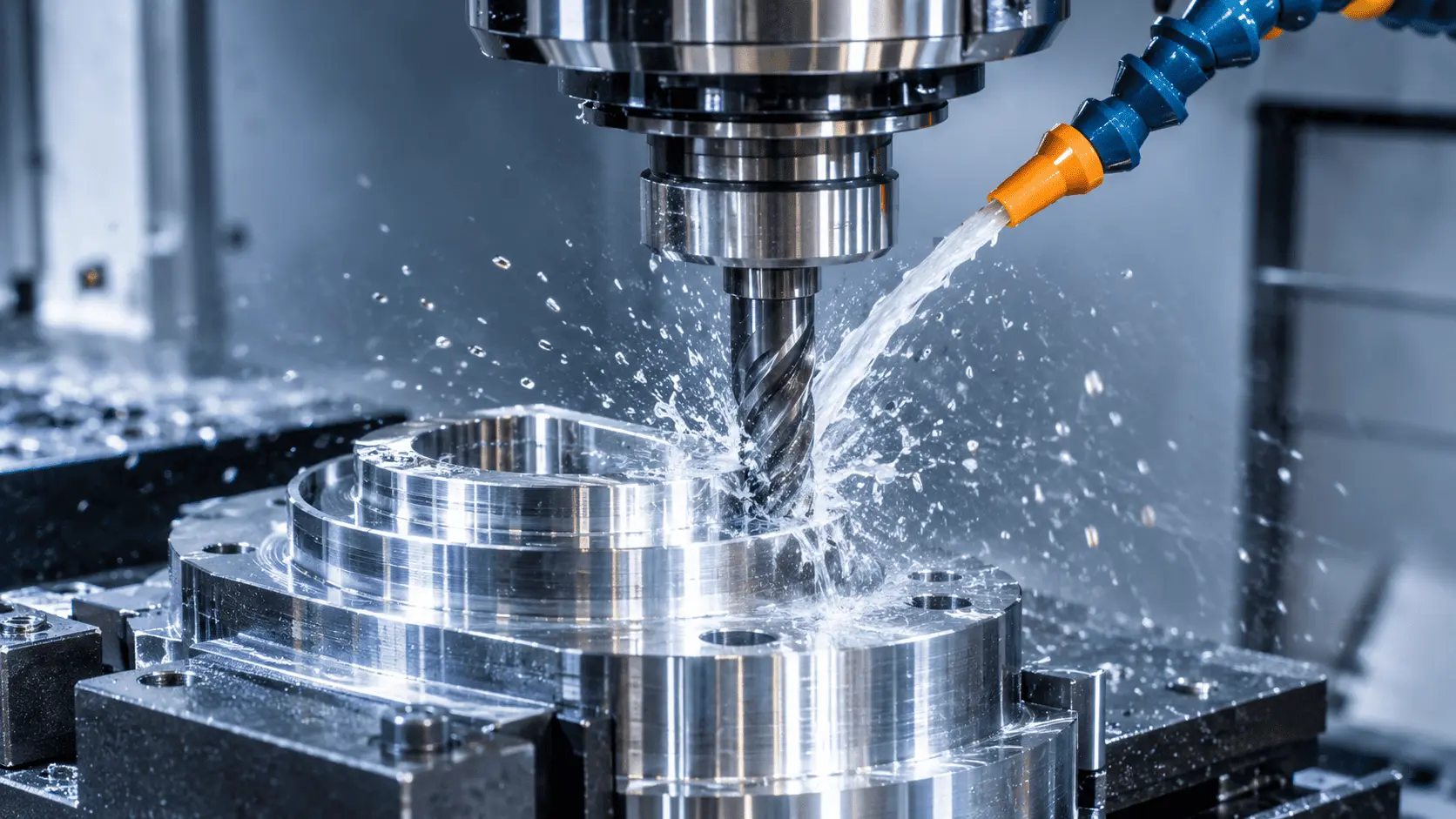
A rotating cutter removes material from a workpiece that is held still or indexed. Milling suits flat faces, pockets, slots, complex contours and bolt patterns. It is the usual choice for housings, brackets, manifolds, base plates and fixtures.
CNC Turning
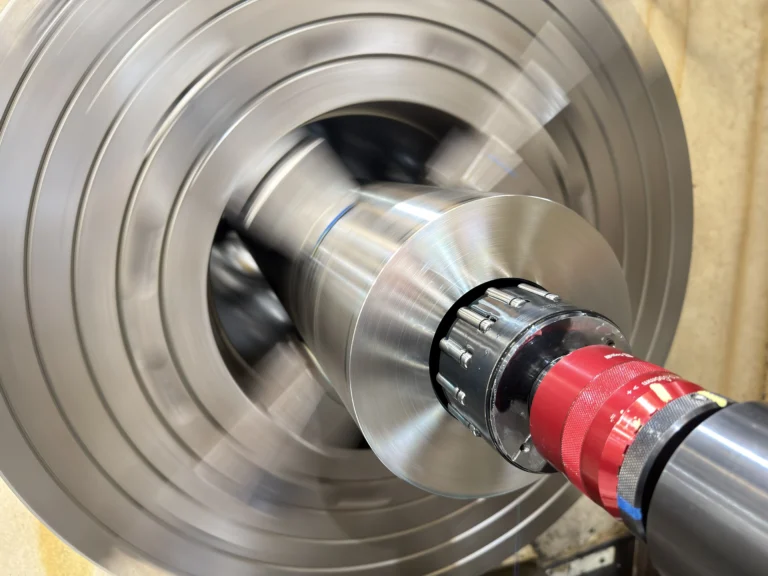
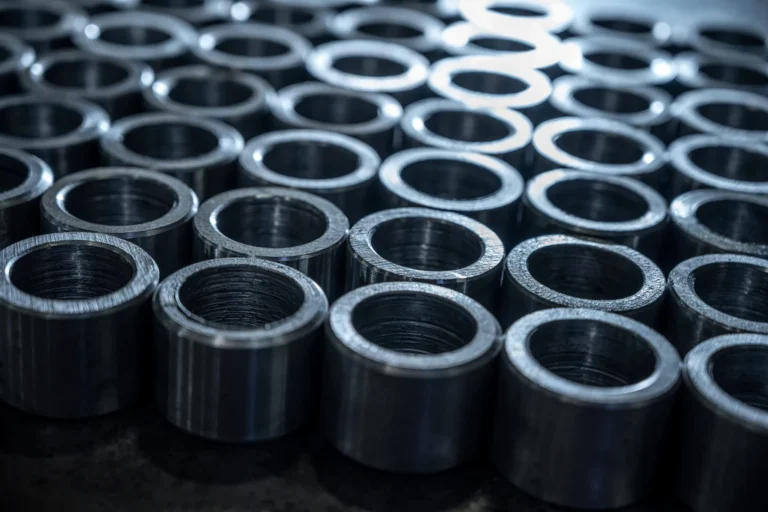
Here the workpiece rotates against a cutting tool. Turning is ideal for shafts, bushes, pins, flanges and threaded parts. Lathes with live tooling can also mill flats and drill cross holes in the same setup, which saves time and protects accuracy.
Multi-Axis Machining
Four-axis and five-axis machines tilt or rotate the part so several faces can be reached in one clamping. Fewer setups mean fewer handling errors and a better chance of holding the positional relationship between features.
Materials Commonly Machined
The material often decides the process, the tooling and the final cost.
| Material | Typical use | What to keep in mind |
| Aluminium alloys | Housings, fixtures, light structures | Machines quickly and offers good strength for its weight. Anodising can improve surface protection. |
| Carbon and alloy steels | Shafts, gears, tooling | Strong and tough, but needs rust protection in humid conditions. |
| Stainless steels (such as 304 and 316) | Marine, food and chemical equipment | Good corrosion resistance. Harder to machine because it work hardens. |
| Duplex stainless steels | Oil and gas, seawater service | Higher strength and chloride resistance. PREN is often used to compare pitting resistance. |
| Brass and bronze | Bushes, valves, fittings | Good machinability and wear behaviour. |
| Engineering plastics (nylon, acetal, PEEK) | Insulators, bearings, wear parts | Light and chemical resistant, but thermal expansion needs allowance. |
In the Gulf, material choice matters as much as machining accuracy. Heat, humidity, coastal salt air and seawater exposure can attack the wrong alloy quickly. Confirm the grade and ask for mill test certificates where the application calls for them.
From Drawing to Finished Part: A Typical Workflow
A well-run job follows a clear sequence, and knowing it helps you send the right information at the right time.
- Enquiry and drawing review: engineers check the 2D drawing or 3D model, tolerances, material and quantity.
- Quotation and feasibility: the workshop flags anything difficult to machine and may suggest small changes, such as standard corner radii, that reduce cost.
- Programming: CAD/CAM toolpaths are created and simulated before any metal is cut.
- Setup and first-off: fixtures and tools are prepared, and a first part is machined and checked.
- Production: the batch is run with in-process checks on critical features.
- Inspection: calipers, micrometres and height gauges cover routine checks, while a CMM (coordinate measuring machine) verifies complex geometry.
- Finishing and delivery: deburring, anodising, plating or heat treatment is completed as required, then the parts are packed with the agreed documentation.
Workshops that operate under an ISO 9001 quality management system normally record these stages, which makes repeat orders far easier.
Industries That Use CNC Machining Services in Sharjah
Precision machined parts appear wherever equipment must fit exactly and keep working under stress. Sharjah’s industrial districts, free zones and position next to Dubai, Ajman and the Northern Emirates support a wide mix of sectors, and manufacturers across Sharjah serve many of them.
Oil and Gas
Valve components, flanges, pump shafts, couplings and spares for rotating equipment are common requests. Corrosion-resistant grades are frequent, especially where chloride exposure is a concern.
Safety reminder: pressure-containing, lifting or rotating parts must be made to the relevant code and approved by a qualified engineer. Machining accuracy alone does not make a part safe for service.
Marine and Shipping
Salt air and seawater are tough on metal. Shaft sleeves, bushes, pins, pump parts and deck hardware are regularly machined from marine-suitable alloys, often as urgent replacements for vessels that cannot afford to wait.
Construction and Heavy Equipment
Hydraulic cylinder components, pins, bushes and brackets wear out under heavy loads. A local workshop can often reverse engineer a worn part faster than an overseas supplier can ship an original.
Manufacturing, Packaging and Food Machinery
Rollers, guides, change parts and wear plates keep production lines moving. Stainless steel and food-safe plastics are common choices where hygiene matters.
Water, Power and Utilities
Pump shafts, valve parts and fittings must handle continuous duty. Consistent machining and good material records support long service life.
Prototyping and Product Development
Design engineers and start-ups use CNC to build functional prototypes before committing to tooling. Anyone looking for CNC machining in Sharjah for a new product will find prototyping one of the quickest ways to test fit and function.
How to Choose the Best Precision CNC Machining Services in Sharjah
The best precision CNC machining services in Sharjah are the ones that match your tolerances, materials, volumes and documentation needs, not simply the ones with the longest equipment list. Use this checklist when comparing suppliers.
| What to check | Why it matters | Question to ask |
| Machine range and capacity | Determines part size and complexity | What are your maximum part sizes and axis options? |
| Inspection equipment | Proves the part meets the drawing | Do you use a CMM, and can you supply inspection reports? |
| Quality system | Supports consistent results | Do you work to ISO 9001 or equivalent procedures? |
| Material traceability | Essential for critical applications | Can you provide mill test certificates? |
| Engineering support | Better parts at lower cost | Will you review my drawing for manufacturability? |
| Finishing options | Avoids managing several vendors | What is done in house and what goes to approved partners? |
| Communication and lead time | Keeps your project on schedule | Who is my contact, and how are delays reported? |
Visit the workshop if you can. Send a sample drawing and see how detailed the response is. Be cautious about a quote far below the rest, because it can signal skipped inspection or substitute material. Buyers who compare CNC machining suppliers on price alone often pay more later in rework and delays.
Talk to Accurate Edge About Precision Machining Services in Sharjah
If you have a drawing, a worn part or an early prototype idea, the team at Accurate Edge can review it with you and advise on materials, tolerances and the most practical route to a finished component. You do not need a perfect specification. A clear sketch and a note on how the part will be used is a good start.
To discuss your drawing, call +971 4 885 8090 or send your files through the contact form.
Frequently Asked Questions
What are precision machining services in Sharjah?
They are CNC-based manufacturing services that turn drawings into accurate metal or plastic parts. Workshops use mills, lathes and inspection tools to hold the dimensions and finish your design requires. Typical work includes spares, prototypes and production batches.
How do I find the best precision CNC machining services in Sharjah?
Compare suppliers on inspection capability, quality systems, material traceability and engineering support, not on price alone. Ask for a quotation on a real drawing and note how clearly the workshop explains its process. A visit to the facility is very helpful.
What materials can a CNC workshop in Sharjah machine?
Most workshops handle aluminium, carbon steel, stainless steel, brass, bronze and engineering plastics. Duplex stainless steels and other specialised alloys depend on the shop’s tooling and experience, so confirm before ordering.
How accurate is CNC machining?
Accuracy depends on the machine, the material, the part geometry and the process control. The achievable tolerance for your part should be confirmed with the workshop and written on the drawing, using standards such as ISO 2768 where suitable.
Can CNC machine shops in Sharjah make a single spare part?
Yes. Many workshops machine one-off spares, and they can often reverse engineer a worn component from the sample and measurements. A drawing or the original part makes the process quicker.
What files should I send to get a quotation?
Send a 2D drawing in PDF and, if available, a 3D file in STEP format. Include the material, quantity, tolerances, surface finish and a short note on how the part is used.
Conclusion
Good parts are rarely noticed, and that is the point. They fit, they last and they keep your equipment running. Choosing the right provider of precision machining services in Sharjah comes down to capability, inspection, communication and a clear understanding of your application.
Whether you need an urgent replacement shaft or a batch of housings, a well-run workshop backed by sound precision engineering Sharjah practice can give you consistent results close to home. For any part used in pressure, lifting or other safety-related service, involve a qualified engineer and follow the applicable code.
Ready to discuss your drawing? Speak with the Accurate Edge team.