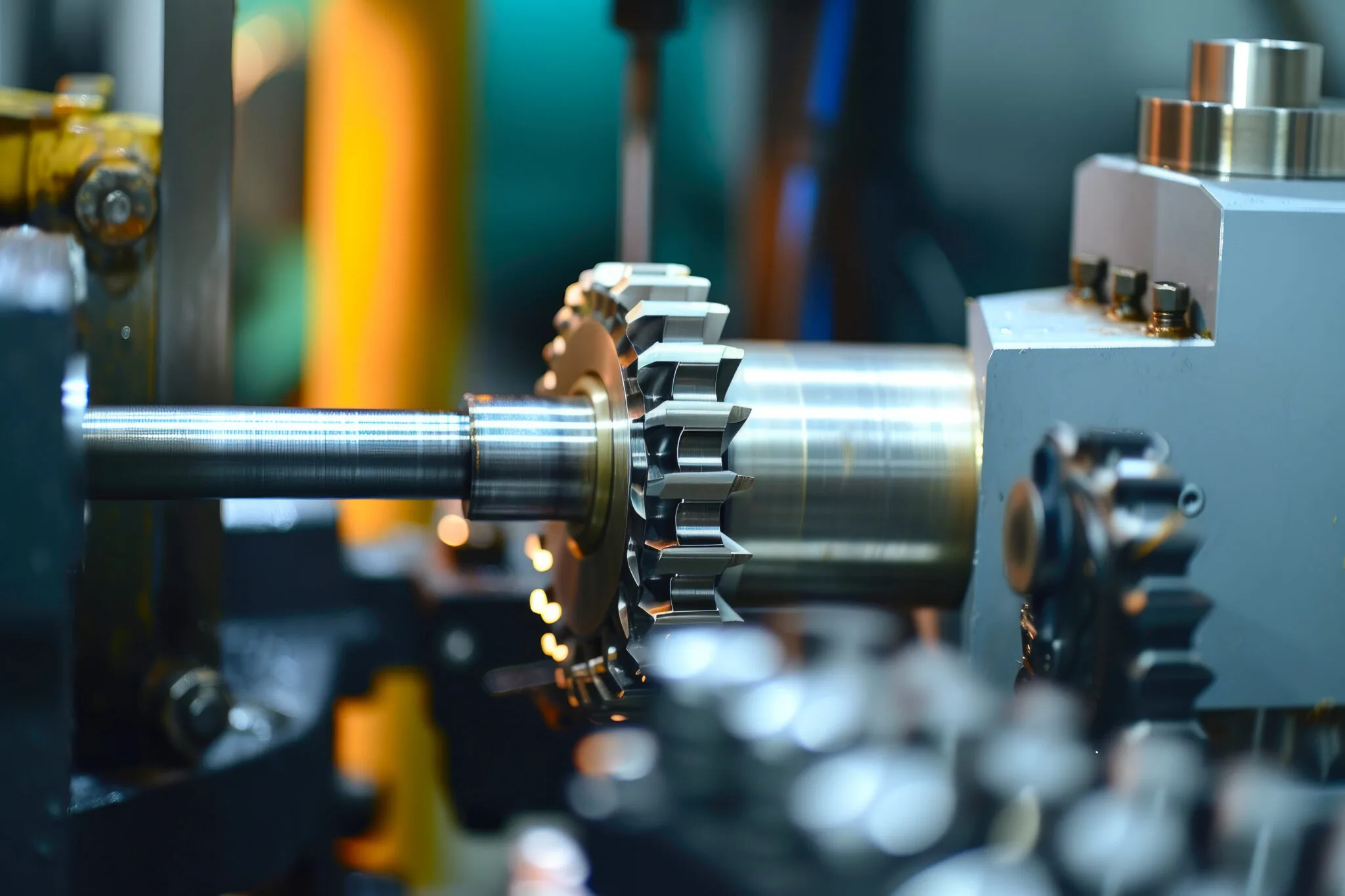

Getting a product from idea to physical part used to take weeks. Today, with CNC machining, engineers across the UAE can go from a CAD file to a fully functional, production-grade prototype in days. Not a rough model. Not a concept piece. An actual precision component made from the real material, to the real tolerances, ready for testing.
That is what rapid prototyping with CNC machining means in practice. And for industries like oil and gas, aerospace, and industrial manufacturing where getting the design right before committing to full production is critical, it changes how development works entirely.
At Accurate Edge, we have been machining precision components from our Dubai Investment Park facility since 2007. We work with engineering teams across the UAE and GCC who need prototypes and low-volume parts made fast, made right, and made from materials that reflect the final application. Here is everything you need to know about how the process works.
What Is Rapid Prototyping with CNC Machining?
Rapid prototyping with CNC machining is a subtractive manufacturing process where a CAD design is converted directly into a physical part by a computer-controlled cutting machine. The machine removes material from a solid block of metal or plastic until the finished component shape remains.
Unlike 3D printing which builds parts up layer by layer from plastic or resin, CNC machining cuts from real engineering materials. The prototype you get is not a visual model. It is a functional component made from the same material, to the same tolerances, with the same surface finish as the production part would be. You can fit it, test it, load it, and trust what the results tell you.
This process supports rapid CAD to part conversion, functional testing under real conditions, tight tolerance prototyping for critical applications, and direct scalability from prototype to production using the same CNC program.
How Rapid Prototyping with CNC Machining Works
Step 1: CAD Design and File Preparation
Everything starts with a CAD model. The cleaner the design, the faster the process. Defined tolerances, correct geometry, and specified surface finishes in the CAD file mean less back and forth before machining begins. Most machine shops accept STEP, IGES, or SolidWorks files.
Step 2: Design for Manufacturability Review
Before any cutting starts, a good machining team will review the design for manufacturability. This means checking wall thickness, feature accessibility, tool clearance, and whether any design features add cost or time without adding function. Catching these things at this stage saves significant money and avoids delays later.
At Accurate Edge, our engineers review every drawing before we quote. If we see something that will cause a problem on the machine or in the final part, we flag it upfront.
Step 3: CAM Programming and Machine Setup
Once the design is confirmed, CAM software converts the CAD model into machine readable toolpaths. The programmer selects the right cutting tools, sets the feeds and speeds, and sequences the operations for the most efficient material removal. The raw material is loaded, the cutting tools are set, and the datum points are established.
Step 4: Machining
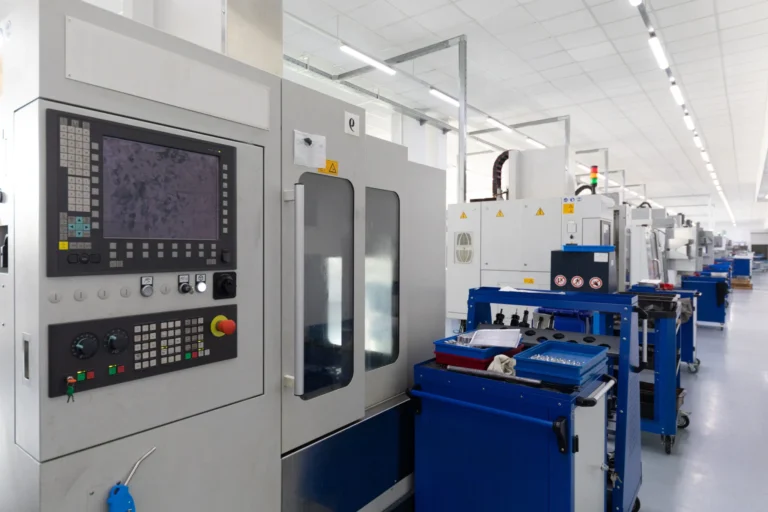
The CNC cutting machine executes the program. Depending on the component, this involves milling complex profiles, turning cylindrical features, drilling holes, boring bores to size, or threading. Modern multi-axis machines can do several of these operations in a single setup, which reduces handling time and improves dimensional accuracy between features.
Step 5: Inspection and Finishing
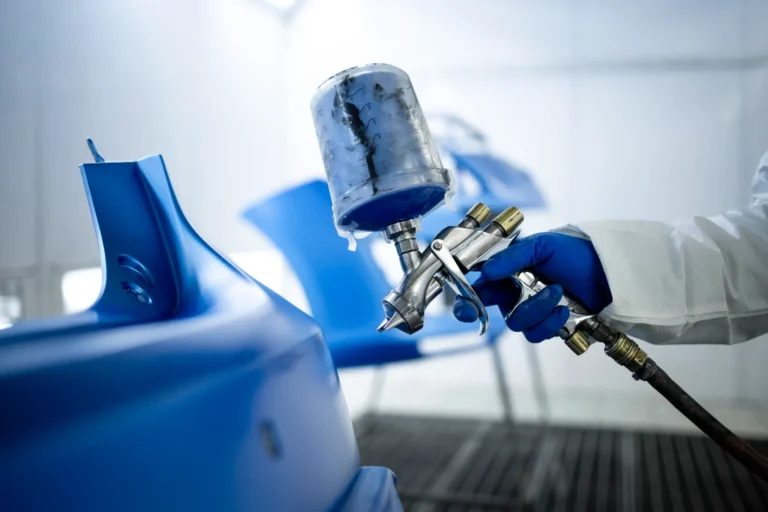
Once machined, the prototype is measured against the drawing. Critical dimensions are checked with calibrated gauges or on a CMM. If the part needs surface treatment after machining, such as electroless nickel plating for corrosion resistance, PTFE coating for dry film lubrication, or copper plating for anti-galling on threaded connections, that is handled in-house at Accurate Edge before the part is delivered.
CNC Machining Operations Used in Rapid Prototyping
CNC Milling
Milling uses a rotating cutting tool to remove material from a stationary workpiece. It is ideal for complex geometries, contoured surfaces, pockets, slots, and tight tolerance features. Five-axis milling centres can machine parts from multiple directions in a single setup, which is essential for components with complex three-dimensional geometry.
Best for: Housings, brackets, manifolds, flanges, structural components
CNC Turning
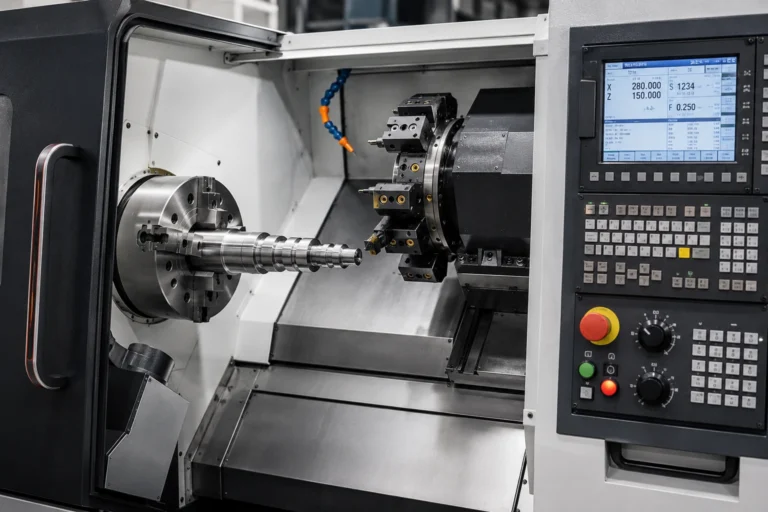
Turning rotates the workpiece while a stationary cutting tool shapes it. It produces cylindrical parts with excellent concentricity and surface finish. Most shafts, valve stems, bushings, and round components start on a CNC lathe.
Best for: Shafts, spindles, valve bodies, pins, cylindrical connectors
CNC Drilling and Boring
Drilling produces holes at precise locations and depths. Boring brings existing holes to final diameter and surface finish. In prototype components with complex bolt patterns or internal passages, positional accuracy here is critical.
Best for: Hydraulic manifolds, ported components, bolt patterns
Deep Hole Drilling
For components requiring long, straight, accurate bores with length to diameter ratios greater than 10:1, deep hole drilling is a specialist process available at Accurate Edge. Common in oil and gas downhole tool prototypes and hydraulic cylinder components.
Materials Used in CNC Rapid Prototyping
One of the biggest advantages of CNC machining over 3D printing for industrial prototyping is material choice. You are not limited to plastics or resins. You can prototype in the exact material the production component will be made from.
Metals commonly used:
Aluminium is lightweight and machines quickly, good for structural prototypes and housings. Steel and stainless steel are used for components requiring strength and wear resistance. Duplex and super duplex stainless steel are specified for corrosion-resistant oil and gas components. Titanium is used in aerospace and high-performance applications where strength to weight ratio is critical. Inconel and nickel alloys are used for high-temperature environments in turbines and petrochemical equipment. Copper alloys and brass are used for electrical and thermal applications.
Engineering plastics:
ABS and polycarbonate for functional plastic prototypes. POM (Delrin) for precision mechanical components requiring low friction. PEEK for high-temperature polymer applications in aerospace and medical.
At Accurate Edge, we have experience machining all of the above including exotic alloys like Inconel, Hastelloy, and Monel that are regularly specified for oil and gas and offshore applications in the UAE.
CNC Prototyping vs 3D Printing – Which Is Right for You?
This comes up a lot. The honest answer is that they are different tools for different purposes.
3D printing is fast and cheap for visual models and early concept validation. If you just need to see what something looks like or check basic fit, 3D printing works fine. But the parts are made from plastic or resin, they are not strong, and the surface finish and dimensional accuracy are nowhere near CNC machining.
CNC machining costs more and takes a little longer for the first part. But what you get is a real component in a real material with real tolerances. If you need to test mechanical performance, fit into an assembly, verify a seal, or subject the prototype to actual operating conditions, CNC machining is the only sensible choice.
For oil and gas, aerospace, and industrial applications in the UAE, the prototype needs to behave like the production part. CNC machining is how you get that.
Why CNC Rapid Prototyping Matters in the UAE Industrial Sector
The UAE’s industrial base, particularly in oil and gas, petrochemical, and aerospace, demands components that work correctly the first time they go into service. Downtime is expensive. Failure in the field is even more expensive.
Rapid prototyping with CNC machining gives engineering teams the ability to validate a design before committing to production. Find out if the dimensions are right, if the material performs as expected, if the seal works, if the assembly fits. Fix problems at the prototype stage where changes cost very little, not at the production stage where they cost a lot.
For UAE companies developing new equipment or sourcing replacement components for ageing plant, CNC machining based rapid prototyping compresses the development timeline significantly and reduces the risk of getting to production with a design that has not been properly validated.
What to Look for in a CNC Prototyping Partner in UAE
Not every machine shop can deliver proper rapid prototyping. Here is what actually matters when choosing.
- Multi-axis capability Three-axis machines handle most prismatic components. Five-axis machines handle complex geometry in a single setup. If your prototype has compound angles, curved profiles, or features on multiple faces, you need a shop with five-axis capability.
- Material experience Machining aluminium and machining Inconel or duplex stainless are completely different challenges. Make sure the shop has real experience with the material your component needs, not just a willingness to try.
- In-house finishing If your prototype needs plating, coating, or heat treatment after machining, a shop that handles this in-house saves you time, reduces risk, and keeps the quality chain intact. At Accurate Edge, machining, surface coatings, heat treatment, and CMM inspection all happen under one roof.
- Inspection capability Can they provide a CMM inspection report with the prototype? For critical applications, dimensional verification documentation is not optional.
- Engineering support A good prototyping partner reviews your drawing before machining starts and tells you if something will cause a problem. That design for manufacturability feedback is worth a lot, especially if you are still in the development phase.
- Certifications ISO 9001:2015 certification is the baseline for a quality managed machine shop. For oil and gas components, API Monogram certification matters. Accurate Edge holds both.
Cost and Lead Times for CNC Rapid Prototyping in UAE
Prototype cost depends on part complexity, material, tolerances, and number of setups required. Simple turned components in aluminium can be quoted and delivered very quickly. Complex five-axis parts in exotic alloys take longer and cost more, but are still significantly faster than conventional production tooling.
Once a prototype is approved, the CNC program is reusable for production. There is no retooling cost, no new programming required. The transition from one prototype to a batch of 50 or 500 identical parts is straightforward. That scalability is one of the strongest arguments for CNC machining over other prototyping methods.
Lead times at Accurate Edge for prototype orders are typically discussed at the point of enquiry. We know that development schedules are tight and we work to the timeline you need. If you have an urgent requirement, tell us and we will tell you honestly what is achievable.
Frequently Asked Questions
1. What is rapid prototyping with CNC machining?
It is the process of converting a CAD design into a physical precision part using computer-controlled cutting machines. The part is made from real engineering materials to real tolerances, making it suitable for functional testing rather than just visual review.
2. How accurate are CNC machined prototypes?
Standard CNC machining holds tolerances of around plus or minus 0.05 mm. With careful setup and the right equipment, tolerances of plus or minus 0.005 mm are achievable. This level of accuracy is suitable for aerospace, oil and gas, and medical applications.
3. What is the difference between CNC machining and 3D printing for prototyping?
CNC machining is subtractive, cutting from a solid block of real engineering material. 3D printing is additive, building up from plastic or resin. CNC prototypes are stronger, more accurate, and made from production-grade materials. 3D printing is faster and cheaper for early concept models that do not need to perform under real conditions.
4. How long does CNC rapid prototyping take in UAE?
It depends on part complexity and material. Simple components can be machined in one to two days. Complex multi-axis parts in exotic alloys may take several days to a week. At Accurate Edge we discuss lead times at enquiry stage and work to your development schedule.
5. What materials can be used for CNC prototyping?
Almost any engineering metal or plastic. Commonly aluminium, steel, stainless steel, duplex stainless, titanium, Inconel, copper alloys, ABS, POM, and PEEK. At Accurate Edge we regularly machine exotic alloys used in oil and gas and offshore applications.
6. Can a CNC prototype be used directly as a production part?
Yes, and this is one of the strengths of CNC machining. If the prototype passes validation, the same CNC program is used for production. There is no additional tooling or setup cost to go from one prototype to a production batch.
7. What industries use CNC rapid prototyping in UAE?
Oil and gas, petrochemical, offshore, aerospace, marine, automotive, and general industrial manufacturing. Any sector where precision, material performance, and design validation matter before full production commitment.
8. Where can I get CNC rapid prototyping done in Dubai?
Accurate Edge provides rapid prototyping and low-volume precision CNC machining from our Dubai Investment Park facility. Contact our team or call +971 4 8858090 and we will get back to you within 24 hours.
Conclusion
Rapid prototyping with CNC machining gives engineering and procurement teams in the UAE something very valuable. The ability to hold a real part, made from the right material, machined to the right tolerances, before committing to production. That validation step reduces risk, catches design problems early, and ultimately saves money.
The key is choosing a prototyping partner that has the right machines, the right material experience, in-house finishing capability, and the engineering knowledge to review your design and tell you honestly if something needs to change.
Accurate Edge has been delivering precision CNC machined components from Dubai since 2007. API Monogram Licensed. ISO 9001:2015 Certified. In-house coating services, deep hole drilling, and CMM inspection all under one roof.
Contact our team or call +971 4 8858090. Dubai Investment Park 1, Dubai UAE. Serving the UAE and GCC since 2007.